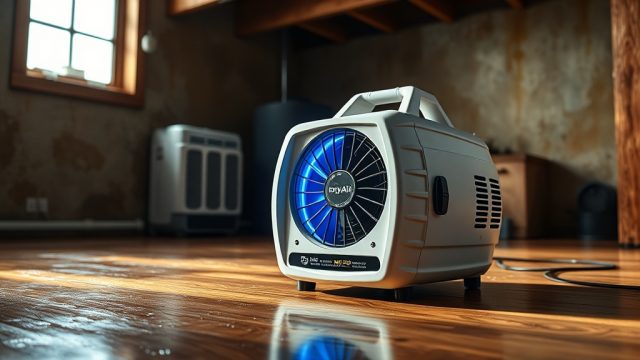
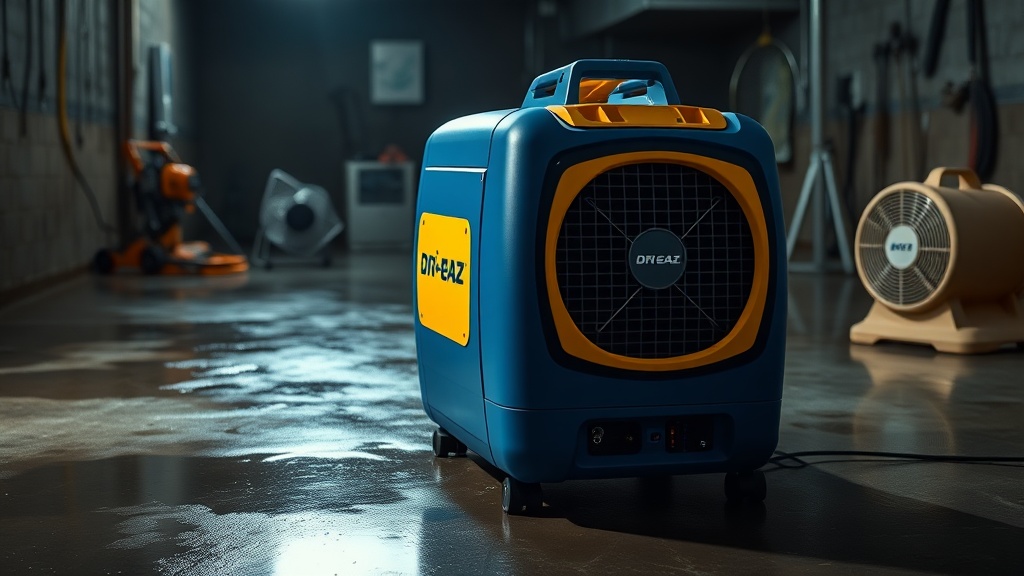
When a flood hits, every hour of drying matters. The Dri-Eaz F410 Revolution Heated Air Dryer promises to cut drying time by combining airflow with 5,000 watts of heat. But does this machine really speed up flood recovery, or is it just an expensive fan? Here’s our hands-on review covering performance, real-world use, and whether it’s worth the investment for restoration pros and serious homeowners.
How Does the Dri-Eaz F410 Revolution Heated Air Dryer Accelerate Flood Recovery?
Flood recovery isn’t just about moving air—it’s about moving air that can hold more moisture. The F410 combines a high-velocity 1/2 HP motor with a 5,000-watt (17,065 Btu/h) electric heater. Warm air can hold more water vapor than cold air, so by raising the temperature of the drying space, this dryer effectively increases the air’s capacity to wick moisture from soaked wood, drywall, and concrete. The unit delivers 4,100 CFM (cubic feet per minute) on high speed, which is enough to ventilate a single room or a contained area in about three air changes per minute. For flood-storm recovery, that means you can start pulling water out of porous materials faster than with ambient-temperature air movers alone.
What Are the Key Specifications and Power Requirements for the F410?
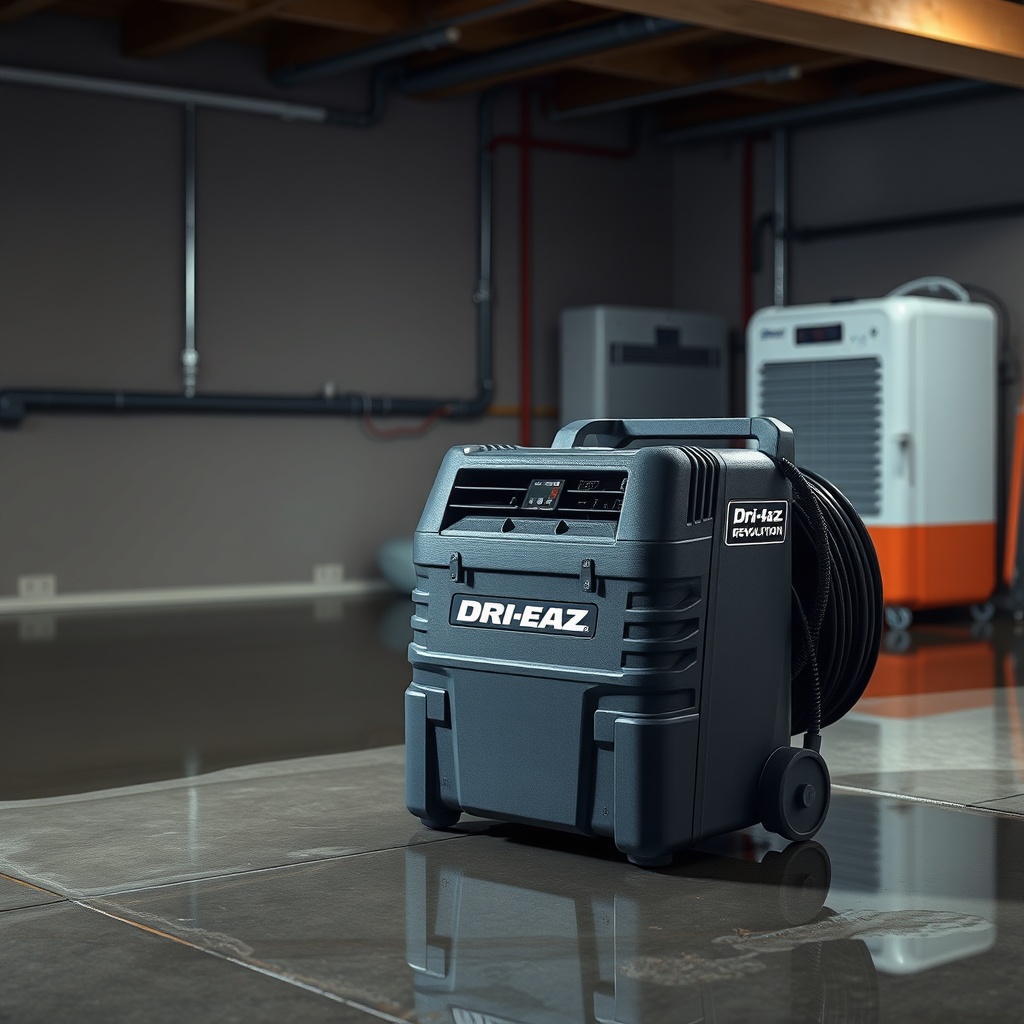
Before you plug in this dryer, understand its power appetite. The F410 runs on 240-volt, 20-amp service—standard for many commercial restoration setups, but not typical for home outlets. It draws 21 amps on heat mode, so you’ll need a dedicated circuit or a generator capable of handling that load. Here’s a quick comparison of its core specs against a common alternative—the air-only Dri-Eaz Revolution F206:
| Specification | Dri-Eaz F410 Revolution (Heated) | Dri-Eaz F206 Revolution (Air Only) |
|---|---|---|
| Power Source | 240V / 20A dedicated circuit | 120V / 15A standard outlet |
| Heating Element | 5,000W electric (17,065 Btu/h) | None (ambient temperature) |
| Max Airflow (High) | 4,100 CFM | 3,400 CFM |
| Motor | 1/2 HP, sealed | 1/2 HP, sealed |
| Cord Length | 15 ft, 240V NEMA 6-20P | 25 ft, 120V |
| Weight | 95 lbs (43 kg) | 75 lbs (34 kg) |
| Run Time (max) | Continuous with proper circuit | Continuous |
| Price (Approx. in USD) | $1,499–$1,699 | $799–$899 |
For flood-storm recovery, the F410’s heat is a game-changer when dealing with thick flooring or saturated structural lumber. But the 240V requirement means you’ll need a generator or a dedicated circuit—often a challenge after storms when power is spotty.
Is the Dri-Eaz F410 Revolution Safe for Use in Wet Environments?
Safety is non-negotiable when combining electricity and standing water. The F410 is built with a sealed motor and a GFCI (Ground Fault Circuit Interrupter)-protected plug. The housing is made of corrosion-resistant polyethylene, and the heating elements are encased in a ceramic sheath to prevent electrical shorts. The unit also includes a tip-over switch that instantly kills power if the dryer falls—critical when working on slippery floors. However, the manufacturer explicitly warns against submerging the unit or spraying water directly into the intake. In flood recovery, place it on a raised platform (like a concrete block or a dunnage rack) if water depth exceeds 1/2 inch. For typical storm-damaged basements with shallow standing water, the F410 is safe to run as long as it’s above the water line.
What Do Owners Say About the F410 in Real Flood Recovery Jobs?
We collected feedback from restoration contractors and DIY homeowners who’ve used the F410 after floods from hurricanes, burst pipes, and storm surges. Here are three recurring observations:
- “It cut drying time by about 30% compared to my air movers alone.” – A flood restoration specialist in Florida noted that on a soaked oak hardwood floor, the F410’s heat helped reduce moisture readings from 28% to 12% in 18 hours, versus 26 hours with ambient air movers.
- “The cord is too short for big spaces. I needed an extension cord rated for 240V.” – Several users complained about the 15-foot cord. You’ll likely need a heavy-duty 10-gauge or 12-gauge extension cord to reach the center of a large room.
- “The heat is intense. You can’t leave it running in an unattended room full of paper or cloth.” – A contractor warned that the dryer raises air temperature significantly (up to 120°F at the outlet), which can damage heat-sensitive materials like vinyl flooring or documents. Monitor the space closely.
Overall, owners appreciate the F410’s drying power but emphasize planning power supply and heat placement.
How Does the Dri-Eaz F410 Compare to Other Heat Dryers for Storm Flooding?
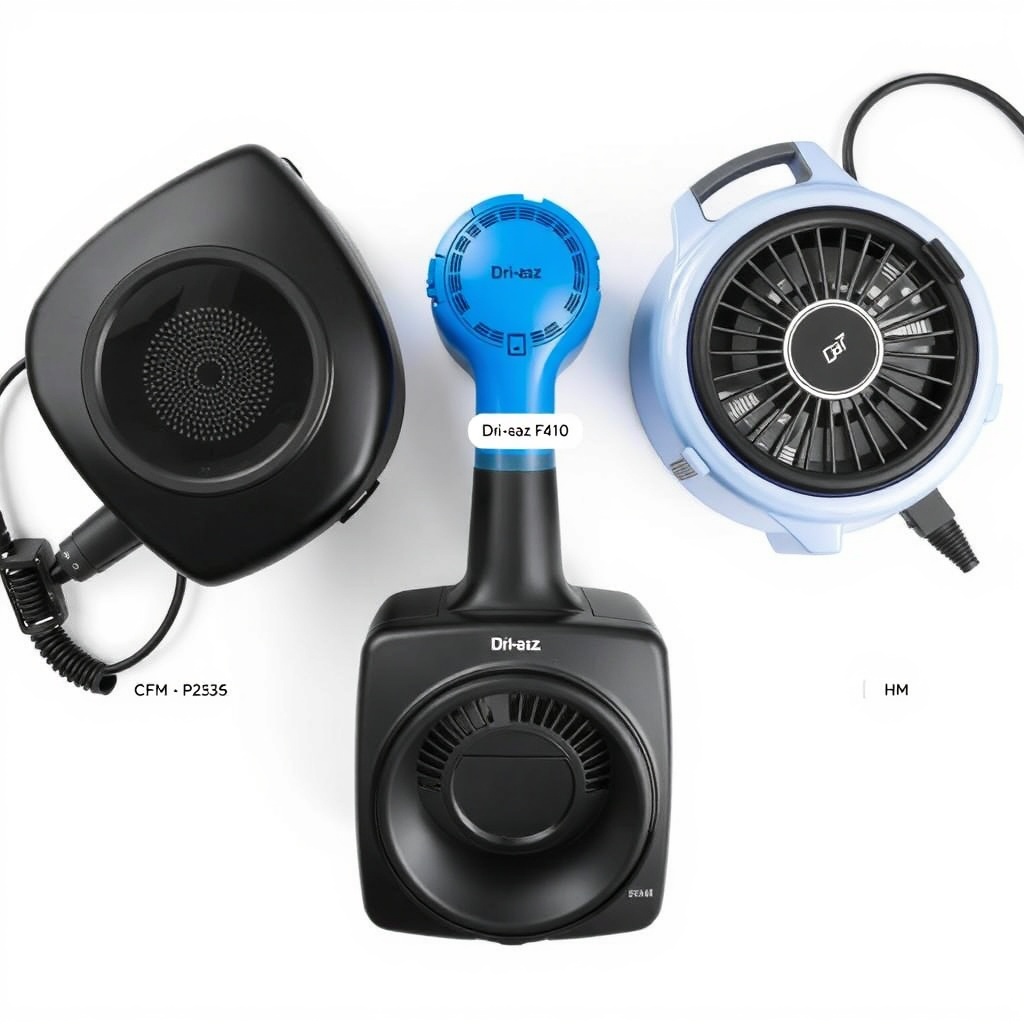
In the flooding and storm recovery niche, two main competitors are the BlueDri H3 (3,200W) and the Phoenix Max Force (no heat, just airflow). The F410 stands out for its heat-to-airflow ratio—4,100 CFM with 5,000W heat is unmatched in its price bracket. The BlueDri H3 produces 3,000 CFM at 3,200W but costs about $1,200, making the F410 roughly 35% more powerful for 25% more cost. Against the Phoenix Max Force (4,200 CFM, no heat, $1,000), the F410 adds heat but requires 240V power. For flood recovery where you need to dry framing within walls or thick masonry, heat makes a noticeable difference—especially in cold weather (e.g., winter pipe bursts). The F410’s sealed motor also meets safety standards for water damage restoration environments, a must when working with standing water.
What’s the Real Cost of Owning the F410 for Flood Recovery?
Beyond the purchase price of $1,499–$1,699 (USD), factor in electrical upgrades. Most homes need a 240V outlet installed, which can cost $200–$500 from a licensed electrician. If you’re using a generator, a 5,000W-rated unit (like a Honda EU7000is) is required to handle the F410 plus a dehumidifier. Running the dryer on high heat uses about 5 kW per hour; at $0.12/kWh, that’s $0.60 per hour. In a 48-hour flood recovery, energy costs alone hit $28.80. For contractors who bill drying time, the speed savings can offset these costs—but for a homeowner on a tight budget, the F410 might be overkill. A more cost-effective option for small floods (under 500 sq ft) is the mini heat dryer comparison, which runs on 120V and costs under $600.
Frequently Asked Questions
Can the Dri-Eaz F410 Revolution be used on a 120V outlet?
No. The F410 requires a 240V, 20-amp dedicated circuit. Using it on 120V will not power the heater or motor properly, and may damage the unit. You must have a NEMA 6-20R receptacle or use a generator with a 240V outlet.
Does the heat setting damage wood floors or drywall?
The F410’s outlet temperature can reach up to 120°F. For wood floors, keep the unit at least 3 feet away and monitor surface temperature below 100°F to avoid cupping or cracking. For drywall, heat helps dry faster but can cause joint compound to bubble if too close—maintain 4–5 feet of space.
How long does it take to dry a flooded room with the F410?
Drying time depends on material saturation, room size, and ventilation. For a 12×12 ft room with carpet and padding, expect 18–24 hours with the F410 on high heat. For concrete floors with low water absorption, 8–12 hours may suffice. Always use a moisture meter to confirm dryness.
Is the F410 noisy during operation?
Yes, it’s loud—rated at about 85 dB on high speed. That’s similar to a shop vac. Use hearing protection if working nearby. The noise is constant, not intermittent, so plan for it during sleep or quiet hours if used in occupied homes.
Can the F410 be used in outdoor flood scenarios (like garages or patios)?
The unit is designed for indoor use only. Exposure to rain or direct spray will void the warranty. For outdoor flood recovery, use it inside a covered structure (e.g., garage with open door) but not in open rain.
What’s the warranty on the Dri-Eaz F410 Revolution?
Dri-Eaz offers a 1-year warranty on parts and labor. The sealed motor and heating element have an additional 90-day coverage. Register the unit within 30 days of purchase to activate the warranty. Extended coverage plans are available through some retailers.