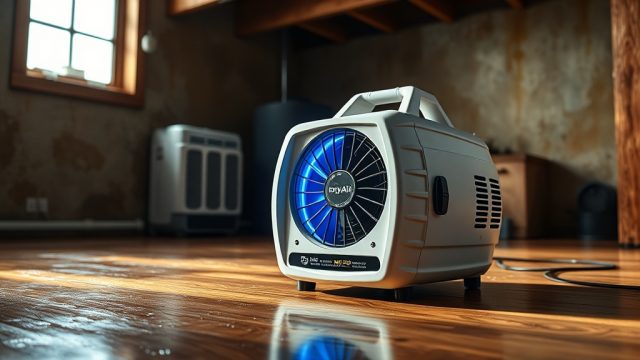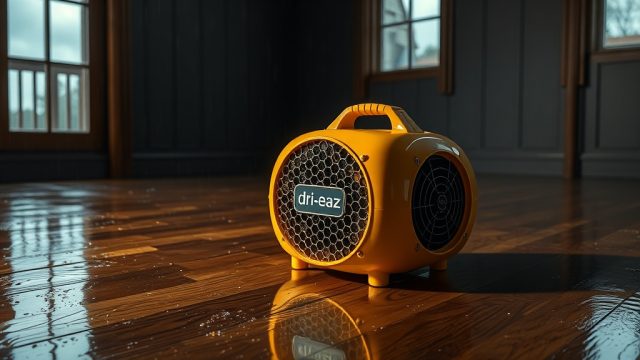
What Makes the Dri-Eaz GRL-2000 Grilla Max a Key Tool for Flood and Storm Recovery?
In the aftermath of a flood or severe storm, water damage restoration professionals face a race against time. The Dri-Eaz GRL-2000 Grilla Max, a high-volume, low-amp (HVLA) air mover with integrated heat, has emerged as a critical asset for speeding up structural drying. This article examines how this specialized equipment addresses the unique challenges of post-storm water extraction, from reducing drying times to preventing secondary mold growth.
How Does the Grilla Max Accelerate Drying After a Flood?
Flood recovery demands rapid evaporation to prevent permanent damage to wood, drywall, and concrete. The Grilla Max delivers 2,000 cubic feet per minute (CFM) of airflow, but its real advantage lies in its 10-amp heater, which can raise the temperature of discharged air by up to 30°F (17°C). Warmer air holds more moisture, increasing the evaporation rate by up to 40% compared to standard air movers. During a storm response, this means a flooded basement or crawlspace can be dried in days rather than weeks, reducing the risk of structural decay and mold spore germination.
The unit’s two-speed motor allows operators to choose between high output for initial water extraction and lower speeds for final drying, conserving energy over long shifts. For a deeper look at how the Grilla Max compares to other restoration dryers, see our Dri-Eaz GRL-2000 Grilla Max Heated Air Dryer Review: Best for Water Damage Restoration?.
What Are the Key Specifications for Storm Response?
Understanding the technical specs of the Grilla Max helps restoration teams match it to the severity of water damage. Below is a comparison table highlighting its performance relative to typical flood recovery demands.
| Specification | Dri-Eaz GRL-2000 Grilla Max | Standard High-CFM Air Mover |
|---|---|---|
| Airflow (High Speed) | 2,000 CFM | 1,500–1,800 CFM |
| Heater Output | 10 amps (1,150 Watts) | None |
| Temperature Rise | Up to 30°F (17°C) | 0°F |
| Power Draw (High) | 13 amps (with heater) | 7–9 amps |
| Weight | 38 lbs (17.2 kg) | 25–35 lbs |
| Max Daisy Chain | Up to 4 units on 15-amp circuit | Depends on model |
| Noise Level | 81 dB | 75–85 dB |
The heater is particularly valuable in cold climates where floodwater temperatures can fall below 50°F (10°C), slowing evaporation naturally. By raising the ambient temperature, the Grilla Max maintains optimal drying conditions even in unheated crawlspaces. For a direct comparison with another top-tier product, check out our Dri-Eaz GRL-2000 Grilla Max vs Phoenix R200 Max Air Mover for Mold Control article.
Can the Grilla Max Prevent Mold Growth After Storms?
Mold can begin developing within 24–48 hours of water intrusion from storms. While the Grilla Max is not a dehumidifier, its heated airflow works synergistically with desiccant or refrigerant dehumidifiers to lower relative humidity. By accelerating surface drying, it deprives mold spores of the moisture they need to colonize. In practical terms, restoration technicians often deploy Grilla Max units in banks of three to five per affected room, aiming for 10–15 air changes per hour. This method drastically reduces the window for mold establishment.
However, mold prevention requires more than just air movement. The unit must be paired with thorough water extraction and antimicrobial treatments. For a dedicated guide to this application, read Dri-Eaz GRL-2000 Grilla Max: Preventing Mold After Storms?.
How Does This Unit Handle Leak Detection in Flood Scenarios?
After standing water is removed, hidden moisture within wall cavities and floor joists remains a threat. The Grilla Max’s directional airflow can be aimed at baseboards or vented into enclosed spaces to create positive pressure, forcing moist air out. This technique, known as “purging,” assists leak detection tools by revealing wet spots through thermal imaging or moisture meters. While not a leak detection device itself, the Grilla Max enhances the effectiveness of such tools by moving moisture to the surface where it can be measured. Explore the full methodology in our article on Dri-Eaz GRL-2000 Grilla Max for Leak Detection: A Comprehensive Guide.
What Do Restoration Professionals Say About the Grilla Max?
Field feedback from water damage contractors in the United States and Canada consistently praises the Grilla Max for its ruggedness and drying speed. A technician from Florida recovery operations noted: “After Hurricane Ian, we ran these units 24/7 for two weeks. The heaters allowed us to dry wet wood in half the time it took with standard fans.” Another owner from Colorado commented on the daisy-chain feature: “Being able to plug four units into one circuit saved us from having to run extension cords all over the job site—critical when you’re working in flooded basements with limited power.”
Some users mention the noise level as a drawback, but most agree that the trade-off is acceptable for commercial-grade performance. The 38-pound weight is also highlighted as manageable for a single technician to carry upstairs or into tight spaces. Overall, the consensus is that the Grilla Max is a workhorse that justifies its price point in severe storm scenarios.
Frequently Asked Questions (FAQ)
What is the price of the Dri-Eaz GRL-2000 Grilla Max?
The retail price for a new unit typically ranges from $549 to $699 USD, depending on the vendor and any promotions. Used units can be found for $400–$500 USD.
Can the Grilla Max be used without the heater?
Yes, the heater switches independently when the fan is running. In mild conditions or for sensitive materials, you can run the fan only to save energy.
How many Grilla Max units do I need for a 1,000 sq ft flood area?
For standard residential drying, restoration professionals recommend three to five units per 1,000 square feet, spaced evenly to create consistent airflow. More may be needed for high ceilings or porous materials.
Does the Grilla Max comply with OSHA noise limits?
At 81 dB, the unit exceeds the 85 dB threshold for long-term exposure without hearing protection. Technicians should wear ear protection when working near multiple units for extended hours.
Can this unit be left unattended overnight?
Yes, it is designed for continuous operation. However, always check that it is placed on a stable, dry surface and that the power cord is not submerged or damaged. Follow manufacturer guidelines.
Is the Grilla Max effective for drying hardwood floors?
Yes, when combined with subfloor drying systems. The gentle heat helps avoid floor cupping, but ensure temperatures do not exceed 95°F (35°C) to prevent damage to finishes.