How Does the Dri-Eaz Accel 2200 Honeycomb Air Mover Improve Storm Recovery Speed?
When floodwaters recede, every minute counts. Mold can begin to grow within 24-48 hours, and structural materials like drywall, wood, and concrete can suffer irreversible damage if not dried quickly. The Dri-Eaz Accel 2200 Honeycomb Air Mover has become a cornerstone tool for professional water damage restorers because it moves air differently than standard fans. Its honeycomb-style housing and high-velocity output create directed airflow that sweeps moisture from floors, walls, and cavities much faster than conventional units. For homeowners and contractors facing the aftermath of a storm, this piece of equipment can mean the difference between a straightforward dry-out and a complex, costly rebuild.
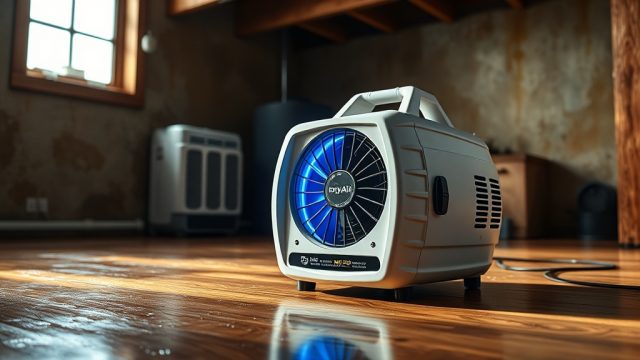
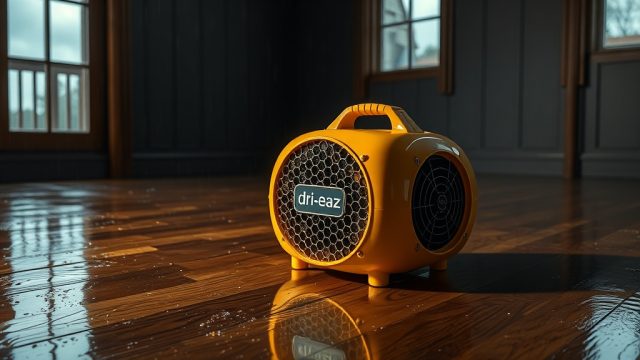
During flood and storm recovery, the key challenge is removing trapped moisture from porous materials. The Accel 2200 is designed specifically for that task. It pushes air at up to 2,200 cubic feet per minute (CFM) through a patented honeycomb grille, which breaks the airflow into multiple jets. This creates a sheet of air that skims surfaces, increasing evaporation rates. It is a professional-grade unit built to operate in demanding environments, whether it is a flooded basement after a hurricane or a waterlogged commercial building after a burst pipe. Understanding its specific capabilities helps restoration teams and homeowners decide if it’s the right tool for their recovery plan.
Why Is the Honeycomb Design Critical for Drying Flooded Structures?
Standard box fans or pedestal fans create a turbulent, diffuse airflow that can actually push moisture deeper into materials if not positioned carefully. The Accel 2200’s honeycomb grille is not just for aesthetics—it is a functional innovation. The grid of hexagonal cells channels air into organized streams that form a uniform, high-velocity sheet. This “laminar” airflow pattern sweeps moisture from surfaces and directs it into the open air, where dehumidifiers can remove it. In storm recovery, where water has soaked into baseboards, drywall, and subflooring, this directed airflow is essential for achieving dry standards quickly.
The honeycomb design also reduces turbulence and noise, which is valuable when working in occupied homes or during overnight drying cycles. Operators can stack multiple units to create a drying wall or position them in a “push-pull” configuration to force air through enclosed spaces like wall cavities and crawlspaces. For flood and storm recovery, where speed of drying directly affects mold risk, the directed airflow of the honeycomb grille is a significant advantage over conventional air movers.
What Are the Technical Specifications That Matter for Flood Recovery?
To understand whether the Accel 2200 suits a storm-damaged property, restorers need to compare its specifications against the drying requirements of different materials. The table below breaks down the key technical parameters and what they mean for fast water damage drying.
| Specification | Value | Importance for Storm Recovery |
|---|---|---|
| Airflow (CFM) | 2,200 CFM (high speed) | High CFM moves large volumes of air needed to evaporate moisture from wet carpets, wood, and drywall quickly. |
| Motor Type | 1/3 HP, PSC (Permanent Split Capacitor) | PSC motors are durable and efficient for continuous operation during multi-day drying cycles. |
| Power Consumption | 5.2 amps (at high speed) | Low amperage means multiple units can be run on a single 15-amp circuit, crucial when power is limited after a storm. |
| Weight | 26 lbs (11.8 kg) | Lightweight enough for one person to carry up stairs or through debris, yet heavy enough to stay stable. |
| Cord Length | 25 feet (7.6 m) with cord wrap | Long cord reduces the need for extension cords, a safety benefit in wet environments. |
| Housing Material | Rotomolded polyethylene | Impact-resistant and corrosion-proof, able to withstand frequent handling during storm cleanups. |
| Stacking Capability | Up to 3 units high (with interlocking feet) | Stacking allows focused drying in vertical spaces like wet walls or high ceilings. |
| Sound Level | 68 dB (low speed) – 78 dB (high speed) | Relatively quiet operation allows drying to continue overnight without disturbing occupants. |
These specifications show that the Accel 2200 is engineered for professional restoration work. The combination of high CFM, low amperage, and light weight makes it ideal for flood and storm recovery where crews need to deploy multiple units quickly and safely. Its ability to run on standard household circuits without tripping breakers is especially valuable when electrical systems may be compromised after a storm.
How Does the Accel 2200 Perform in Basement Drying After a Storm?
Basements are often the most challenging area in flood recovery. They tend to have concrete floors and walls that absorb water, low ceilings that require directional airflow, and poor natural ventilation. The Dri-Eaz Accel 2200 excels in this environment because of its ability to create a “floor sweep” effect. Placing the unit on the floor at a low angle pushes air across the wet concrete, pulling moisture from the surface into the room where a dehumidifier can capture it. For deeper water penetration in block walls or sump pump pits, multiple units can be arranged in a circular pattern to create continuous air movement.
The honeycomb grille helps direct air into corners and along baseboards, which are common trouble spots after basement flooding. Unlike axial fans that blow air in a cone, the Accel 2200’s sheet of air can be aimed precisely. For example, a restorer can position the unit to blow directly into a wet wall cavity after removing baseboards, forcing air into the void for faster drying of studs and insulation. For basement drying specifically, the Accel 2200’s stackability allows crews to create drying banks in tight spaces, dramatically reducing the time needed to reach dry standards as defined by the IICRC (Institute of Inspection, Cleaning and Restoration Certification).
What Makes the Accel 2200 Different from Standard Air Movers for Storm Recovery?
Many homeowners assume any fan will suffice after a flood, but standard fans are not designed for the specific demands of water damage restoration. The Accel 2200 is a purpose-built tool with features that directly address storm recovery challenges. First, its rotomolded polyethylene housing is impervious to moisture and chemicals, unlike metal fans that can rust or plastic fans that may crack. Second, the motor is sealed and thermally protected to prevent burnout when running for days on end. Third, the unit has a built-in cord wrap and carry handle that make transport and storage efficient, critical when crews are moving through disaster zones.
Another key difference is the ability to stack units without risking toppling. Interlocking feet and a low center of gravity allow restorers to build drying pyramids that focus airflow where it’s needed most. In a storm scenario where time is limited, stacking two or three Accel 2200s can create a powerful “air wall” that speeds evaporation from wet flooring or furniture. For properties with multiple rooms affected, using the Accel 2200 for leak detection and drying can help identify hidden moisture pockets that slow down the recovery process.
Finally, the Accel 2200’s low profile (just over 12 inches tall) allows it to fit under furniture or low clearance areas, which is common in storm-damaged homes where belongings may be stacked or displaced. This versatility makes it a staple in professional restoration vans, but also a wise investment for homeowners who want to be prepared for future storms.
How Does the Accel 2200 Help with Insurance Claims After Flood Damage?
Insurance companies require documented evidence that drying was performed correctly and quickly to approve claims. The faster a property is dried, the less likely secondary damage (like mold or structural rot) will occur, which can reduce claim payouts. The Dri-Eaz Accel 2200 plays a role here because its efficient drying reduces the overall restoration time. Restoration companies that use professional-grade equipment like the Accel 2200 can provide moisture readings and drying logs that demonstrate proper protocol was followed. For streamlining insurance claims after water damage, using equipment that meets industry standards is often a requirement for reimbursement.
Moreover, the Accel 2200’s durability means it can be deployed immediately without downtime, ensuring that drying begins within hours of water intrusion. This rapid response is exactly what adjusters look for when evaluating a claim. A restoration contractor who uses these units can show that they employed “best practices” in drying, which helps avoid claim delays or denials. For property owners filing a claim, seeing professional-grade air movers on site reassures them that their recovery is being taken seriously.
What Owners Say About the Dri-Eaz Accel 2200 Honeycomb Air Mover
Professional restorers and homeowners who have used the Accel 2200 consistently praise its build quality and drying performance. One restoration company owner in Florida, who specializes in hurricane recovery, reports running a fleet of 30 units continuously for weeks after a major storm. He notes that the units never overheated and required no maintenance during that period. Another user, a water damage technician in the Midwest, highlights the stackable design: “We can dry a 2,000-square-foot basement in half the time it used to take with standard fans. The honeycomb grille makes a real difference in how air moves across wet concrete.” Homeowners who purchased the unit for personal use often mention its low noise level—around 68 dB on low speed—which is quieter than a vacuum cleaner and allows drying to proceed overnight without disrupting sleep.
Some owners point out that the unit’s price, typically around £300-£350 (or equivalent in local currency like $350-$400 USD), is higher than basic fans, but they argue the durability and performance justify the cost. Negative feedback is rare, but a few users mention that the unit is not designed for outdoor use or extreme dust environments without a filter. Overall, the sentiment is that the Accel 2200 is a workhorse that delivers on its promise of faster drying, making it a favorite among professionals and proactive homeowners alike.
Frequently Asked Questions
Is the Dri-Eaz Accel 2200 safe to use in wet environments?
Yes, the unit is built with a sealed motor and corrosion-resistant housing. It is designed for use in damp conditions common in flood recovery, but should never be submerged in water. For safety, operators should use GFCI (Ground Fault Circuit Interrupter) outlets and keep the cord away from standing water.
How many Accel 2200 units are needed to dry a typical room after a storm?
For a standard 12×12-foot room with wet carpet and drywall, professional restorers recommend two to three units positioned to create air movement across all wet surfaces. For larger areas like basements, one unit per 200-300 square feet is a good starting point, though humidity and material type affect the exact number.
Can the Accel 2200 be used to dry crawl spaces or attics?
Yes, its low profile and stackability make it suitable for confined spaces like crawl spaces and attics. The directed airflow from the honeycomb grille can reach into corners and along insulation. However, ensure the unit is placed on a stable, dry surface to prevent tipping.
What is the average lifespan of an Accel 2200 in storm recovery conditions?
With proper maintenance (regular filter cleaning and cord inspection), the motor and housing typically last 5-10 years, even with heavy professional use. Many restoration companies report using units for over 8 years before replacement is needed.
Does the Accel 2200 work with a dehumidifier?
Absolutely. The Accel 2200 is designed to work in tandem with dehumidifiers. The air mover increases evaporation from wet surfaces, while the dehumidifier removes the moisture from the air. This combination is essential for achieving dry standards quickly after flood or storm damage. For flood and storm recovery specifically, pairing multiple air movers with a high-capacity dehumidifier is the standard approach.
What maintenance does the Accel 2200 require after a flood?
After each use, remove the front grille (screws) and clean the honeycomb screen and the rear intake filter with a soft brush or vacuum. Check the cord for cuts or damage. Store the unit in a dry area. Annual lubrication of the motor bearings (if accessible) can extend its life, but many units are sealed and require no service.