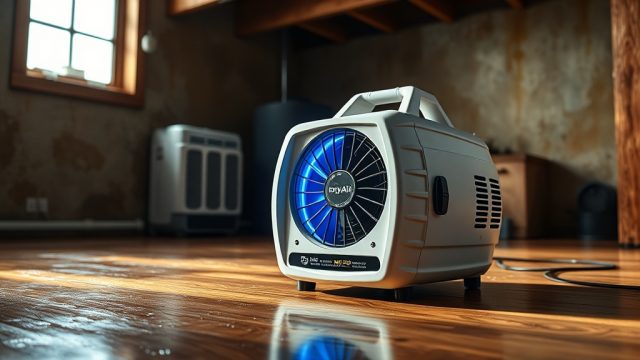
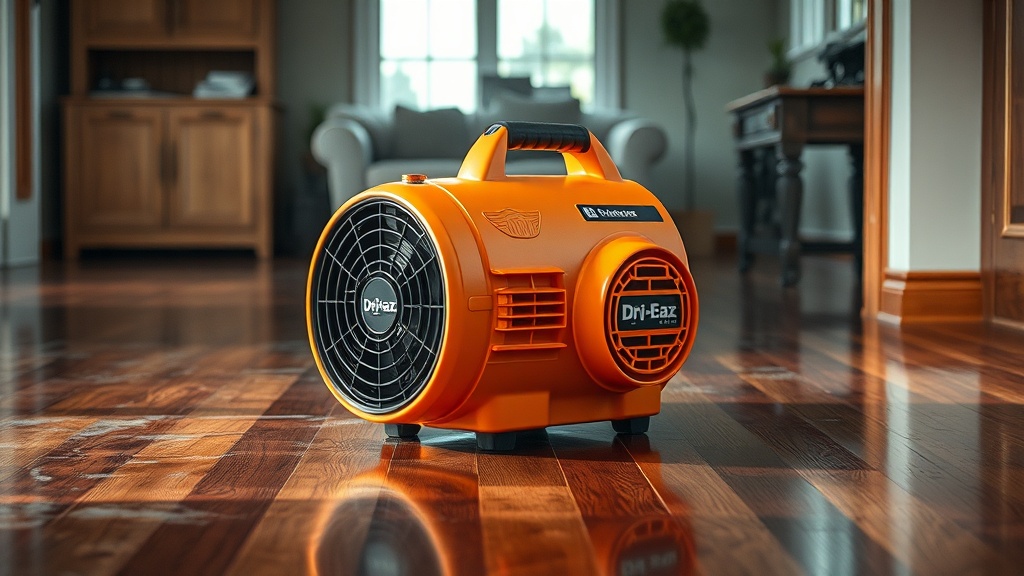
When floodwaters recede, the clock starts ticking on structural drying. The Dri-Eaz Accel 2200 Honeycomb Air Mover has become a fixture in professional restoration kits, but does it truly outperform standard axial fans in high-moisture scenarios? This article examines its construction, airflow characteristics, and real-world performance specifically for flood and storm recovery.
What Makes the Honeycomb Air Mover Unique for Flood Recovery?
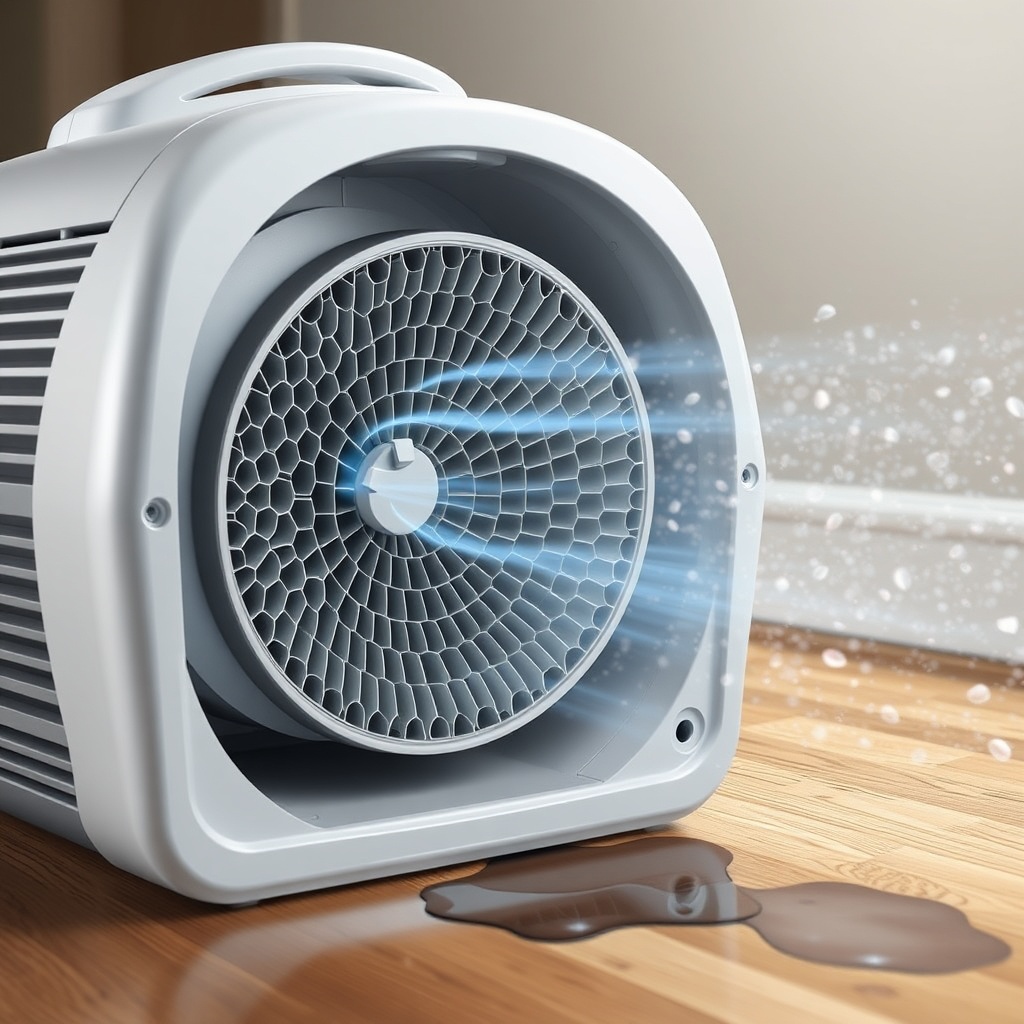
The “Honeycomb” name refers to the Airpath™ technology found inside the Accel 2200. Unlike traditional cage fans that create turbulent air, this unit uses a honeycomb-like stator and a specifically designed impeller to produce a laminar air column. In flood recovery, this means air moves straight across wet surfaces—carpet, pad, subfloor, and drywall—rather than circulating in inefficient patterns. The directional air stream accelerates evaporation by forcing moisture-laden air away from wet materials.
This design is critical for storm recovery because it allows for stacking and placement in tight spaces. The Accel 2200 can be positioned three-high or placed directly against walls without losing drying effectiveness. Its robust 1/3 HP motor produces 2,200 CFM on high speed, but the honeycomb geometry maintains that airflow at lower static pressures, which is beneficial when pushing through staircases or under cabinets.
Can This Unit Handle Standing Water and High Humidity?
Flood recovery often involves standing water and ambient humidity exceeding 90%. The Accel 2200 is engineered for these extremes. Its motor is enclosed in a corrosion-resistant housing, and the power cord is fitted with a moisture-resistant strain relief. While no air mover is submersible, this model can operate in environments where condensation collects on surfaces. The wheels are designed to roll over wet carpet without sinking.
However, users should note that this unit is not designed to remove standing water itself. It is an evaporation accelerator, not an extractor. For flood recovery, it should be used after the bulk water is removed with a wet/dry vacuum or submersible pump. The Accel 2200 excels at driving evaporation from carpet, pad, and wood, reducing the risk of delamination and fungal growth.
| Specification | Value | Relevance to Flood Recovery |
|---|---|---|
| Airflow (High) | 2,200 CFM | High enough to dry 500 sq. ft. of wet carpet per unit |
| Motor Power | 1/3 HP | Sufficient for sustained operation in humid conditions |
| Cord Length | 25 ft. | Allows placement away from wet outlets |
| Dimensions | 22” × 21.6” × 18.6” | Stackable three-high for concentrated drying |
| Weight | 35 lbs. | Light enough to move, heavy enough to stay put |
| Energy Use | 5.0 Amps | Low energy consumption for continuous use |
How Does the Accel 2200 Compare to Axial Fans for Storm Recovery?
Axial fans are common in restoration because they are inexpensive and light. But for flood recovery, the Accel 2200 offers distinct advantages. Axial fans push air in a cone shape that dissipates quickly, requiring multiple fans to cover a large area. The Accel 2200’s honeycomb design produces a narrow, columnar airstream that can be aimed precisely. In practice, this means one Accel 2200 can effectively dry a corridor or a set of stairs that would require three standard fans.
Furthermore, the Accel 2200 can be operated on two speeds. Low speed (1,200 CFM) is ideal for overnight drying or when humidity is already high and you want to avoid over-drying surfaces. High speed is for aggressive initial drying. The noise level on low is 66 dBA, which is tolerable in occupied spaces, while high is 76 dBA—louder but manageable for unoccupied flood zones. In contrast, many axial fans exceed 80 dBA on any setting.
What Is the Best Placement Strategy for Flood and Storm Recovery?
Placement is everything in water damage mitigation. For the Accel 2200, the manufacturer recommends positioning the unit 2–4 feet from the wet surface, with the airstream directed parallel to the floor. For carpeted areas, aim the air across the carpet fibers, not directly into them, to avoid blowing water sideways. For drywall, the unit should be angled upward to push air along the wall surface.
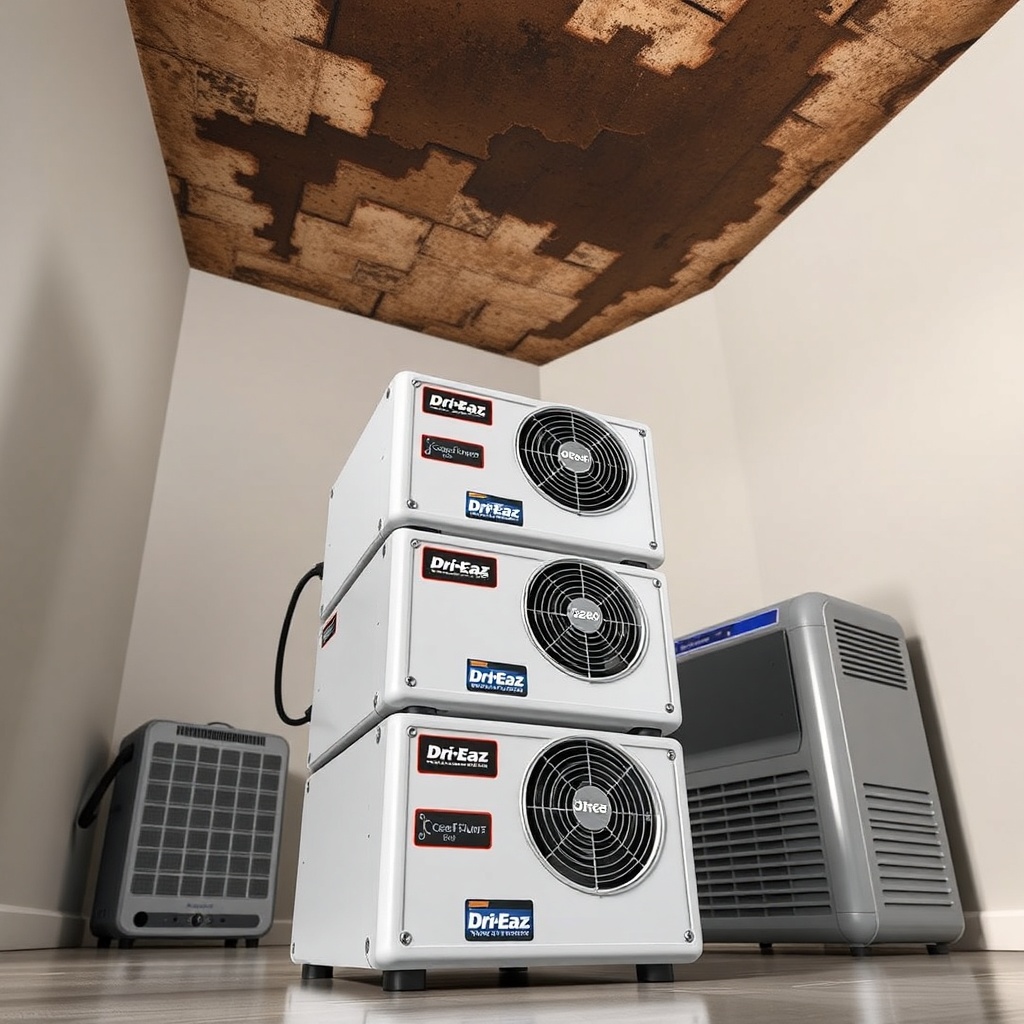
In a typical flood restoration scenario, you might have three Accel 2200 units in a 15′ × 20′ room: one at each corner, all aimed toward the center. This creates a cross-drift pattern that moves moist air toward a dehumidifier. For storm recovery, where water has entered through the roof, units can be stacked on scaffolding to dry ceiling cavities. The stackable design allows for two or three units to be secured together, providing vertical drying power without additional floor clutter.
Are There Any Limitations in Flood Environments?
No piece of equipment is perfect. The Accel 2200 has a few constraints for flood recovery. First, it is not explosion-proof. In flood situations where propane or natural gas leaks may be present—like after a storm—a standard air mover could ignite a spark. The Accel 2200 is not rated for hazardous atmospheres. Second, the plastic housing, while impact-resistant, can become brittle in very cold conditions (below 40°F/4°C). Flood recovery in winter may require pre-warming the unit.
Additionally, the Accel 2200 struggles with heavy sediment. If floodwater contains sand or silt, the impeller can become unbalanced over time. The unit should be inspected after each use and the impeller cleaned. For environments with fine dust or mold spores, the motor is sealed enough to resist debris entry, but the unit is not fully sealed. Using a HEPA air scrubber in tandem is recommended for leak detection and mitigation scenarios.
What Owners Say
Restoration professionals consistently praise the Accel 2200 for its reliability in flood recovery. A common comment is that the unit “runs for days without breaking down,” which is critical when drying times extend to 48–72 hours. Many users report that the honeycomb technology reduces drying time by 20–30% compared to standard fans, despite the higher upfront cost—roughly $450–$550 per unit in 2025.
One owner from the Gulf Coast notes: “After Hurricane Ian, I used six of these in a 2,000 sq. ft. house. They didn’t even get warm. The carpet was dry in under three days.” Another reviewer mentions that the stackable feature allows for compact storage in a service van, freeing space for extraction equipment. Some users caution, however, that the wheels are small and can clog with mud, recommending larger casters for outdoor flood work. Overall, the sentiment is that the Accel 2200 is a wise investment for professionals who frequently handle storm claims.
Frequently Asked Questions
1. Can the Dri-Eaz Accel 2200 be used to dry concrete after a flood?
Yes, but the unit’s laminar airflow works best on porous surfaces like carpet and wood. For concrete, combine the Accel 2200 with a low-grain refrigerant dehumidifier for best results.
2. How many units do I need for a typical flooded basement?
For a 500 sq. ft. basement with 4-foot walls, use 3–4 units placed at the corners, all aimed toward the center. Adjust based on humidity readings.
3. Is the Accel 2200 suitable for use with a flood cut on drywall?
Yes. After removing the wet section, place the unit 2–3 feet from the wall, aiming the air flow upward to dry the remaining drywall and wood studs.
4. How do I clean the unit after flood recovery?
Disconnect power. Remove the front grill. Wipe the impeller and honeycomb with a damp cloth and mild detergent. Dry completely before reuse. Do not use abrasive cleaners.
5. What is the expected lifespan in constant flood recovery use?
With regular maintenance, 5–8 years. Bearings may need replacement after 3,000 hours of continuous operation.
6. Can the Accel 2200 be used for prevention and maintenance as well?
Absolutely. Many professionals use it as a maintenance tool to periodically dry crawlspaces or attics to prevent mold growth. Its low-speed setting is ideal for ongoing moisture control.