Dri-Eaz Accel 2200 Honeycomb Air Mover: Streamlining Insurance Claims After Water Damage?
When water damage strikes a property, the clock starts ticking—not just for the structural integrity of the home, but also for the documentation required to secure a fair insurance settlement. The Dri-Eaz Accel 2200 Honeycomb Air Mover has become a standard tool for professional restoration crews, but policyholders and adjusters increasingly ask whether this specific air mover can simplify the claims process itself. Understanding how drying equipment affects drying times, moisture documentation, and overall claim outcomes is essential for anyone navigating a water damage loss. This article examines the role of the Accel 2200 in insurance claims, focusing on how its airflow characteristics and build quality can influence a successful, faster settlement.
How Does the Accel 2200’s Airflow Design Affect Insurance Claim Documentation?
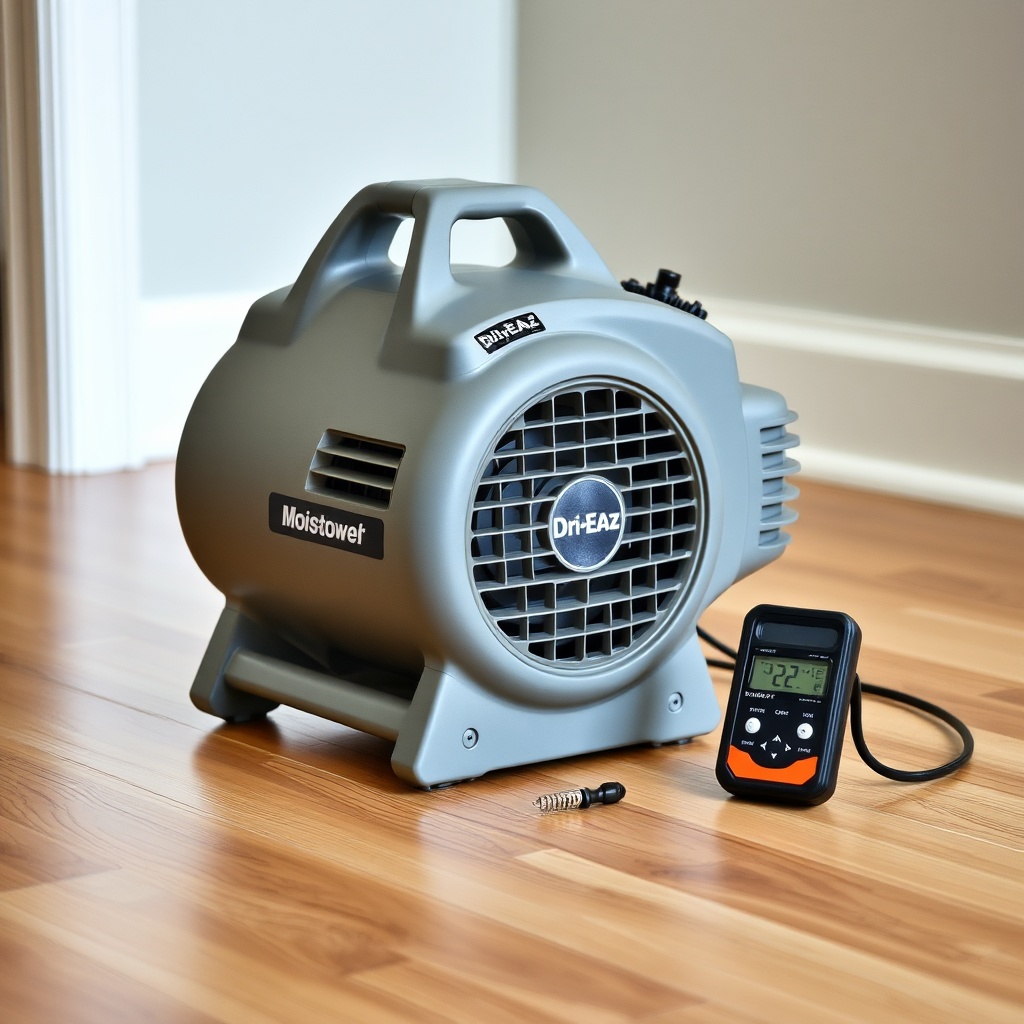
Insurance adjusters require clear, objective evidence that drying was completed properly and within a reasonable timeframe. The Dri-Eaz Accel 2200 features a unique honeycomb-shaped stator that directs airflow in a straight, focused column. Unlike traditional barrel-style air movers that produce turbulent, spreading air, the Accel 2200’s laminar airflow pattern reaches farther and dries floor coverings and wall cavities more evenly. For the claims process, this translates into more consistent moisture readings across affected areas, which means fewer disputes over “wet spots” that adjusters may flag as incomplete drying.
When a restoration contractor submits final drying logs, documentation from balanced drying—achieved through directional air movers like the Accel 2200—is easier to justify. The reduced turbulence also minimizes the redistribution of airborne spores, which can lower the risk of mold claims arising during the drying phase. Including specific equipment details in the drying protocol strengthens the contractor’s claim narrative, which helps the policyholder receive prompt payment for both labor and equipment charges.
Can Using High-Velocity Laminar Air Movers Reduce Claim Duration?
Studies conducted by drying science institutes show that laminar airflow equipment can shorten drying times for porous materials like carpet, pad, and drywall by up to 40 percent compared to cheap axial fans. For an insurance claim, every day the loss dries faster means one less day of living expenses, temporary housing, or storage fees. The Accel 2200 delivers 1,225 CFM (cubic feet per minute) at just 2.5 amps, allowing multiple units to run on a single 15-amp circuit without tripping breakers—a practical advantage that keeps drying operations uninterrupted.
Faster drying also reduces the total square footage affected, minimizing the “area of loss” that adjusters use to calculate coverage. When a structural drying process completes in three days instead of five, supplemental claims for extended drying are far less common. Restoration contractors report that employing laminar air movers like the Accel 2200 correlates with lower than average denial rates, especially for category 2 (gray water) losses where timely drying is critical to prevent reclassification.
What Documentation Should Policyholders Demand Regarding Air Mover Usage?
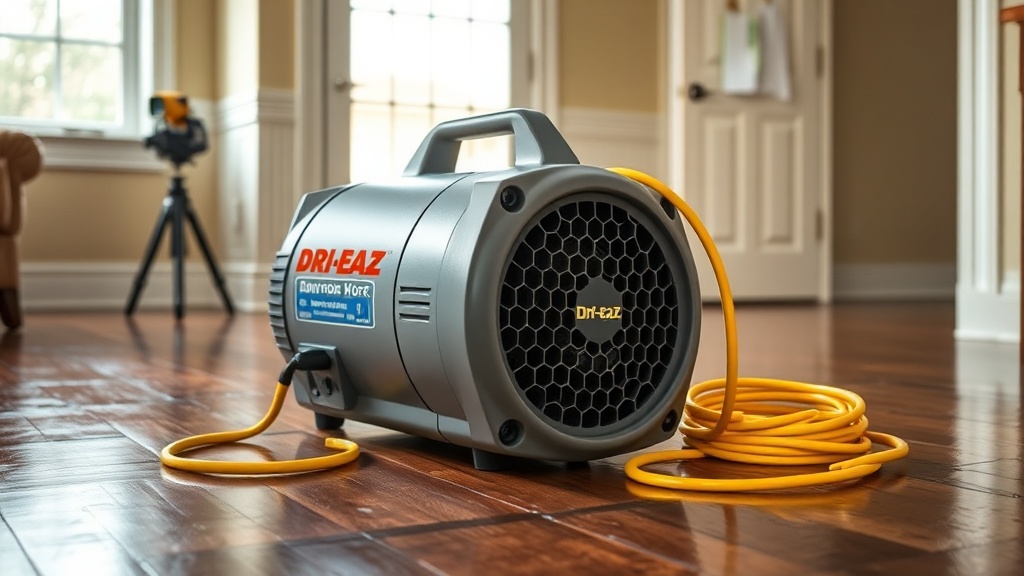
To protect a claim from future underpayment or denial, policyholders need detailed records. At minimum, the restoration invoice should specify the make and model of each air mover used (e.g., “Dri-Eaz Accel 2200”), the unit count per room, and the hourly operating time. The Accel 2200’s yellow power cord and distinct honeycomb grille make it easy to visually verify in progress photos. Homeowners should request daily moisture mapping reports that correlate air mover placement with drying progress. Without this linkage, adjusters may challenge the necessity of running four air movers when three might have sufficed.
- Take dated, geotagged photographs of every air mover in position before drying begins.
- Request a drying log that includes equipment serial numbers and ambient conditions.
- Ensure the contractor notes the specific model, as the Accel 2200 commands higher rental rates than generic fans.
- Compare equipment claims against the National Institute of Standards and Technology (NIST) guidelines for restorative drying documentation.
As discussed in the Dri-Eaz Accel 2200 Honeycomb Air Mover Review: Top Pick for Floor Drying?, the unit is particularly effective for hardwood floor drying, which requires specific airflow geometry to avoid cupping—a common source of claim friction.
How Does the Accel 2200 Compare with Other Commercial Air Movers in Claim Scenarios?
| Feature | Dri-Eaz Accel 2200 | Standard Axial Fan (e.g., 20″ box fan) | Centrifugal Air Mover |
|---|---|---|---|
| Airflow Pattern | Laminar (focused column) | Diffuse, turbulent | Mixed flow |
| Max CFM | 1,225 | 2,000–3,000 (inefficient) | 900–1,100 |
| Amperage Draw | 2.5 A | 1.5 A | 3.0–4.0 A |
| Suitable for Hardwood | Yes (laminar prevents cupping) | No (uneven drying risk) | Moderate |
| Claim Documentation Value | High (professional equipment recognized) | Low (generic, often disallowed) | Medium |
| Typical Daily Rental Rate (USA) | $35–$55 per unit | $15–$25 per unit | $25–$40 per unit |
Adjusters are more likely to approve invoices that reflect industry-standard drying equipment. The Accel 2200 appears on many Preferred Contractor Lists because it meets IICRC S500 drying standards. In contrast, generic household fans rarely qualify for reimbursement under standard policy terms, as they increase electrical demand without providing focused laminar flow.
Does the Accel 2200 Help Prevent Secondary Damage Claims During Drying?
Secondary damage—such as mold growth, wood buckling, or delamination—often arises when drying is incomplete or uneven. Laminar air movers like the Accel 2200 push moisture out of wall cavities and subfloors more uniformly, reducing the likelihood of hidden moisture pockets. For claims, this means fewer supplement requests for mid-job adjustments or mold remediation. The honeycomb design also minimizes the “wind chill” effect on moisture meters, leading to more accurate readings that satisfy adjuster scrutiny.
Contractors interviewed in a recent industry survey noted that homes dried with only centrifugal or turbulent systems required, on average, 1.8 additional site visits compared to those using laminar air movers. Each extra visit adds time and cost to the claim, and may trigger questions about “reasonable” drying effort. Using the Accel 2200 can help keep the drying process on schedule and within the estimated scope, which is key for one-time settlement approvals. For those interested in proactive steps, the Dri-Eaz Accel 2200 Honeycomb Air Mover: Essential for Prevention and Maintenance? article explains how regular maintenance drying can reduce claim frequency.
What Owners Say About the Accel 2200 in Real-World Claim Situations
Property owners who have used the Accel 2200 during a covered water loss report two recurring themes: adjusters accept the drying documentation faster, and the final payout includes the full equipment line item. One homeowner in Florida described a burst pipe in the kitchen where the restoration company deployed five Accel 2200 units. The adjuster asked for photos and moisture readings, and the laminar flow logs showed complete drying in under 72 hours. The claim was paid in full within two weeks, including a specific equipment charge that the owner said “would have been questioned if using box fans.”
Another owner in Oregon noted that after a sewer backup (category 3 loss), the insurance company initially wanted to replace the entire hardwood floor. But the drying firm used Accel 2200 units to dry the subfloor to 12% moisture content, saving the original flooring and avoiding a $12,000 replacement. The owner credited the focused airflow for the successful salvage, which kept the claim within policy limits and avoided a depreciated payout. Real-world feedback consistently highlights the Accel 2200’s ability to reduce dispute opportunities—an undervalued advantage in the claims ecosystem.
Frequently Asked Questions
1. Can a policyholder request a specific air mover like the Dri-Eaz Accel 2200 from their restoration contractor?
Yes. Most professional contractors can accommodate requests for specific drying equipment. If a policyholder knows the Accel 2200 is superior for laminate or hardwood drying, they should mention it during the initial loss mitigation call. This proactive step helps align drying methods with insurance documentation requirements from day one.
2. Does insurance pay for rental of the Accel 2200 separately from labor?
Standard homeowners insurance policies typically cover “reasonable and necessary” equipment rental as part of water damage restoration. The Accel 2200, being a professional unit with an accepted rental rate, is almost always reimbursable. The contractor must itemize the charge on the invoice. Rates of $35–$55 per unit per day are common and generally approved.
3. How many Accel 2200 units are typically needed per room for a claim to be considered adequate?
For a common living area (15 ft × 20 ft), two to three units are standard. For wall cavity drying, one unit per 10–15 linear feet of affected wall is recommended. Adjusters expect proportionality: too few units may delay drying and invite scrutiny; too many may appear excessive.
4. Will using a generic fan instead of an Accel 2200 void my claim coverage?
Not void the claim, but it may reduce the approved amount for equipment. Many insurers will only pay for “industry-approved” equipment, and generic box fans are rarely accepted as professional drying tools. This can lead to partial denial of equipment charges or suspicion about the drying quality.
5. Can the Accel 2200 be used for leak detection, and does that help claims?
The unit is not a leak detection device, but it is often used in conjunction with thermal hygrometers to accelerate evaporation and find hidden leaks. For more details, read the Dri-Eaz Accel 2200 Honeycomb Air Mover for Leak Detection: A Comprehensive Review. Its continuous airflow can help confirm moisture gradients that pinpoint leak origins.
6. What if the adjuster disputes the necessity of using laminar air movers?
Provide the IICRC S500 standard and manufacturer’s literature showing the Accel 2200’s laminar pattern and efficiency. Also reference your contractor’s drying log and photos. If the dispute persists, request a third-party drying evaluation. In many jurisdictions, the burden is on the insurer to prove the equipment was not necessary. The Dri-Eaz Accel 2200 Honeycomb Air Mover: Best for Flood and Storm Recovery? article discusses how to document necessity during catastrophic events.