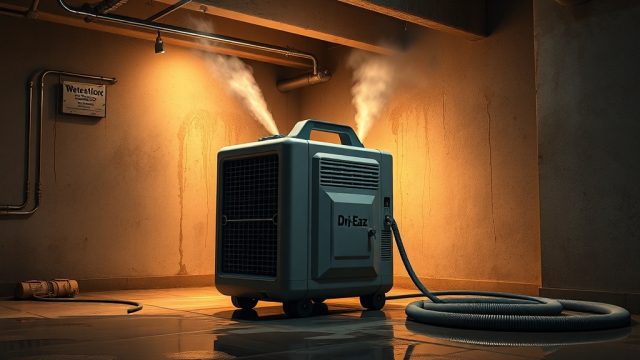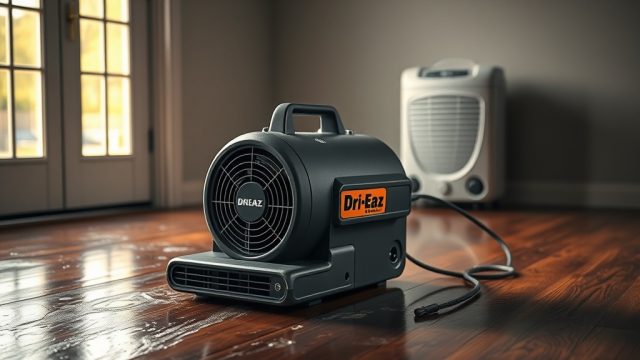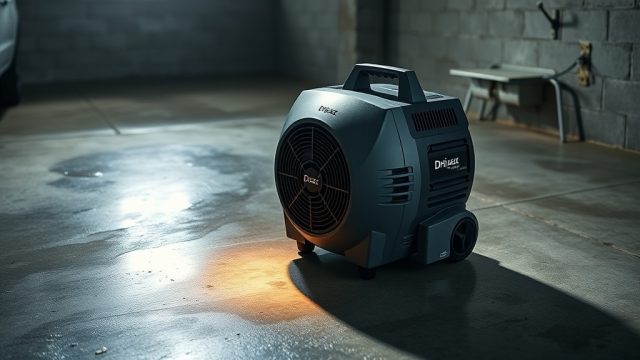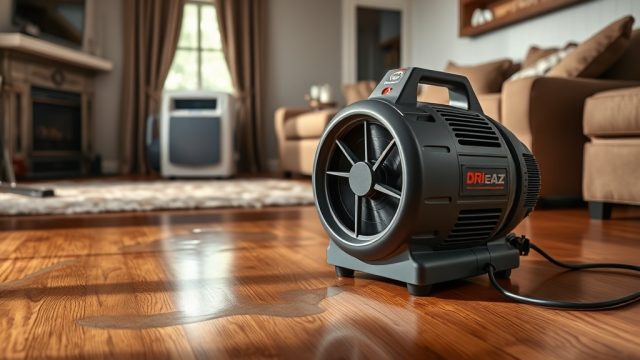
What Is the Dri-Eaz Phantom X2 Centrifugal Air Mover and Why Does It Matter After Storms?
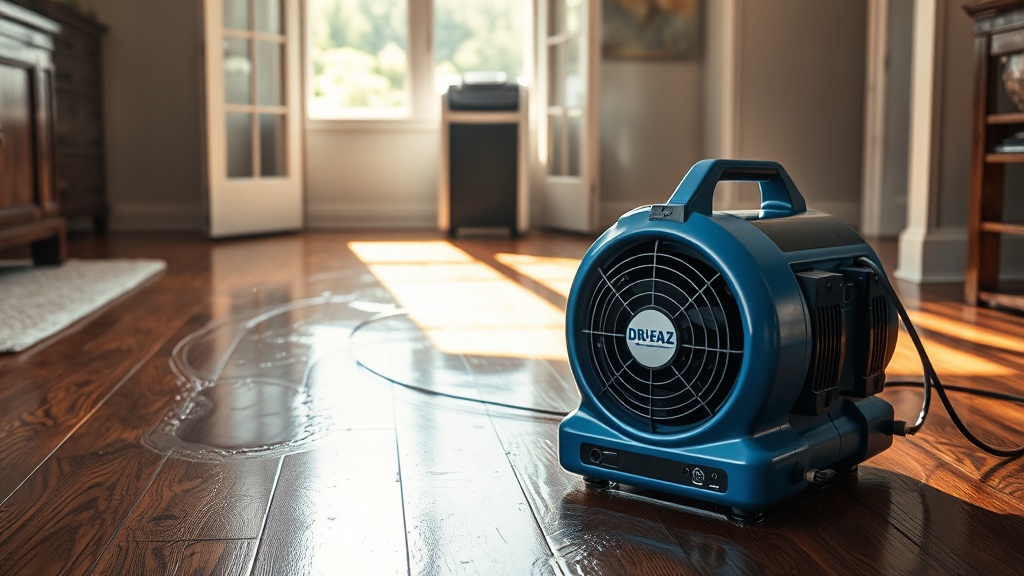
When a storm hits, water intrusion is only the beginning of the problem. The Dri-Eaz Phantom X2 Centrifugal Air Mover stands as a critical tool for property owners and restoration professionals aiming to prevent mold after flooding events. This powerful air mover is designed to accelerate drying by creating high-velocity airflow across wet surfaces, reducing moisture levels that would otherwise feed mold colonies.
The Phantom X2 is not a standard household fan. It uses a centrifugal impeller to generate concentrated airflow, reaching speeds up to 1400 cubic feet per minute (CFM) on high settings. This directed airflow pattern—often called “air knife” drying—targets water trapped in carpets, under flooring, and within wall cavities, which are common hiding spots for post-storm moisture. By rapidly evaporating standing water and deep-seated dampness, the unit directly addresses the conditions mold requires: moisture, warmth, and stagnant air.
For homeowners in regions prone to hurricanes or heavy rainfall, investing in this air mover can mean the difference between a quick restoration and a costly mold remediation. In the U.S., mold damage can run from $2,500 to $6,000 or more for professional removal, while the Phantom X2 retails around $480 to $600. It’s a proactive measure against secondary damage.
How Does the Phantom X2 Prevent Mold Growth After Storms?
Mold spores are everywhere, but they only germinate when moisture persists for 24 to 48 hours. The Dri-Eaz Phantom X2 attacks this timeline by disrupting the humidity and warmth mold needs. Its centrifugal design forces air over wet surfaces continuously, stripping moisture from materials like drywall, wood, and carpet padding.
The unit features three power settings and a stackable design, allowing multiple units to be positioned in a room for even coverage. After a storm, you might place the Phantom X2 in a basement, crawl space, or near a flooded entryway. The airflow not only dries surfaces but also lowers ambient humidity around the area, making it harder for mold to establish. For best results, the equipment should be combined with a dehumidifier, but the air mover does the heavy lifting of surface evaporation.
Consider a scenario: after a Category 2 storm, a home’s floor might stay wet for days. Without active air movement, mold can appear on baseboards within 48 hours. The Phantom X2’s ability to dry a 12×12 room in under 24 hours—depending on material—reduces risk exponentially. We have a Dri-Eaz Phantom X2 Centrifugal Air Mover Review: Best for Moisture Control After Leaks? that goes deeper into drying performance metrics.
What Are the Key Specifications of the Dri-Eaz Phantom X2?
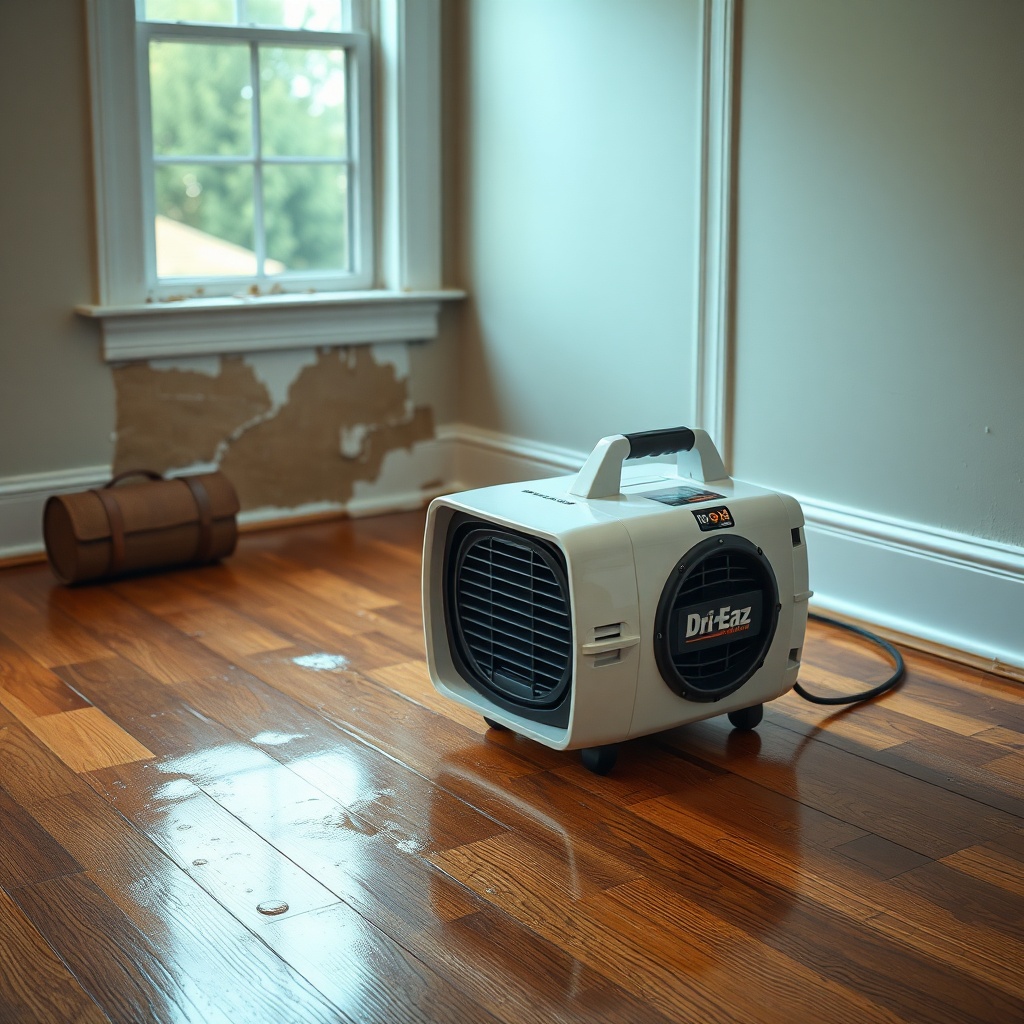
Understanding the technical capabilities of the Phantom X2 helps users match it to their post-storm drying needs. Below is a specification table focusing on mold-moisture-control aspects.
| Specification | Value | Relevance to Mold Prevention |
|---|---|---|
| Airflow (CFM) | 1400 CFM (high) | High airflow removes surface moisture quickly, halting mold development. |
| Motor Type | Permanent split capacitor (PSC) | Reliable operation for long drying cycles after storms. |
| Speed Settings | 3 (low, medium, high) | Adjustable to avoid over-drying fragile materials while maximizing evaporation. |
| Power Consumption | 4.5 amps (high) | Energy-efficient compared to some industrial blowers; suitable for extended use. |
| Weight | 38 lbs | Portable enough for homeowners to move between rooms after flooding. |
| Housing Material | Rotomolded polyethylene | Durable and resistant to moisture, preventing corrosion in damp environments. |
| Stackable | Yes (up to 3 units) | Allows compact storage and focused drying in tight spaces like crawl spaces. |
| Cord Length | 25 ft | Flexible placement without extension cords, important for wet areas. |
| Sound Level | 76 dB (high) | Noticeable but tolerable for short-term restoration; comparable to a vacuum cleaner. |
These specs show the Phantom X2 is designed for rigorous drying. Its airflow pattern is not just about volume but direction: the centrifugal impeller creates a narrow, high-speed stream that can reach under baseboards and into carpet edges, where moisture often lingers. For a comparison with other units for storm recovery, check out the Dri-Eaz Phantom X2 Centrifugal Air Mover: Essential for Flood and Storm Recovery? article.
How Should You Position the Phantom X2 to Maximize Mold Moisture Control?
Placement is everything with the Dri-Eaz Phantom X2. Unlike axial fans that dissipate airflow, the Phantom X2 focuses its output. For mold moisture control, aim the air mover at the wettest surfaces first—often floors, lower walls, and carpet. After a storm, water tends to wick up drywall and into floor joists.
Best practices include:
- Position the unit 6–12 inches away from the wet surface for optimal air velocity.
- Direct airflow across the floor, not straight down, to avoid pushing water into deeper layers.
- Use multiple units in a circular pattern to create a vortex effect, circulating air throughout the room.
- Elevate the Phantom X2 slightly on blocks if flooding is deep, though it’s not meant for immersion.
- Run the unit continuously for the first 24–48 hours post-storm, checking moisture readings with a meter.
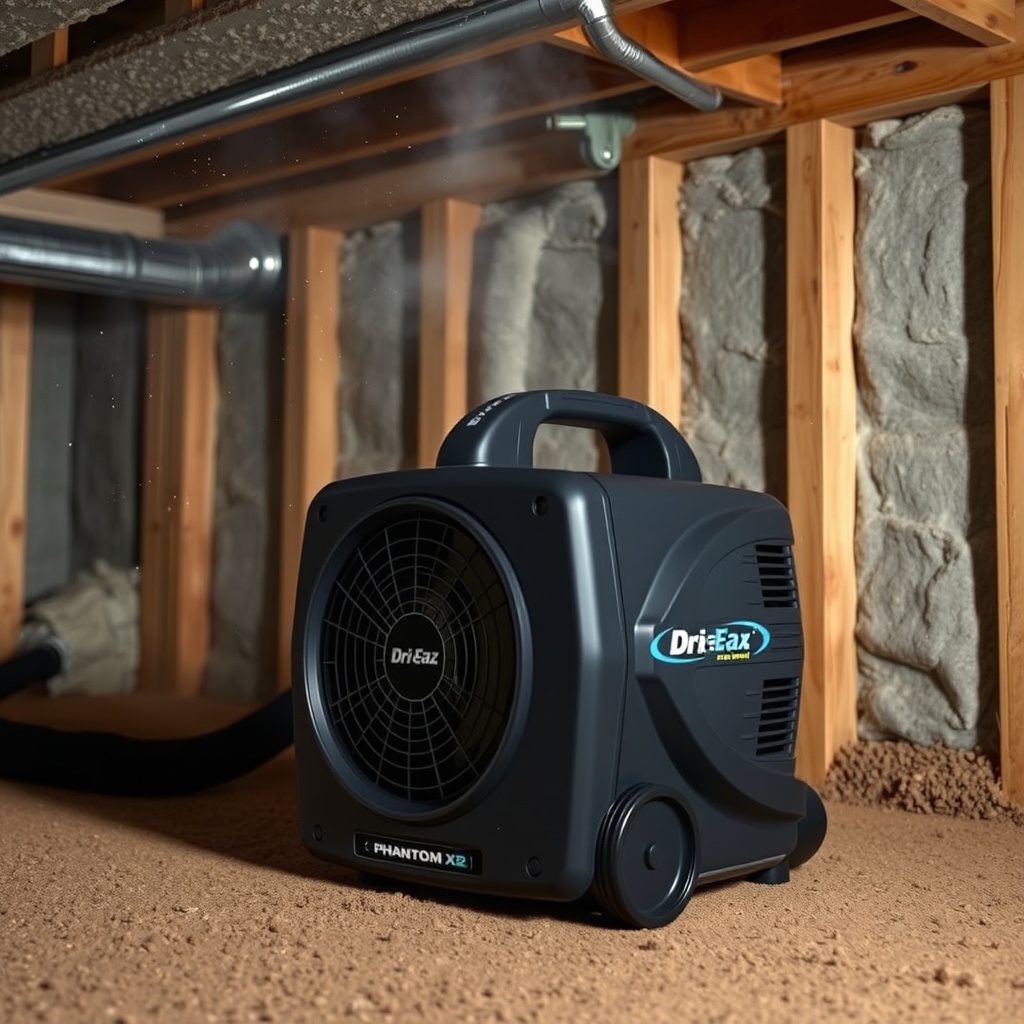
For crawl spaces, the unit’s low profile (13 inches tall) allows placement in restricted areas. The stackable design means you can run two or three units in the same zone without taking up floor space. This setup is crucial for drying subfloor moisture that leads to mold like Stachybotrys chartarum (black mold).
Is the Dri-Eaz Phantom X2 Easy to Clean and Maintain for Long-Term Use?
Yes, maintenance is straightforward but critical for mold prevention. After using the Phantom X2 in a storm recovery, it can collect dust, pollen, and microbial spores from the air. The unit has a washable foam intake filter that traps particles before they enter the motor. Weekly cleaning of this filter is recommended, especially in humid climates.
To clean: unplug the device, remove the bottom grille, slide out the filter, and rinse it with mild soap and water. Allow it to dry completely before reinstalling. The housing can be wiped down with a disinfectant spray—avoid getting moisture inside the motor. Check the power cord for any fraying after use in wet conditions. Dri-Eaz offers replacement parts, but the unit is built for durability, with many models lasting 5–10 years with proper care.
Ignoring maintenance can lead to reduced airflow, which allows moisture to persist and mold to grow. For more on care in mold scenarios, see our Dri-Eaz Phantom X2 Centrifugal Air Mover: A Must-Have for Mold and Moisture Control? guide.
What Do Owners Say About the Phantom X2 for Post-Storm Use?
User reviews on platforms like Amazon and restoration forums highlight reliability. Many owners report that the Phantom X2 significantly reduces drying time after leaks or flooding. A contractor in Florida noted: “After Hurricane Ian, I ran three Phantom X2s in a 1,500 sq ft home. Dried floors in 18 hours—no mold issues. My older axial fans took twice as long.”
Homeowners appreciate the quiet operation compared to pro-level blowers, though 76 dB is still loud for residential settings. The stackability is praised for storage—one user said they fit four in a closet. Some criticisms mention the lack of a built-in GFCI outlet, so users must plug into a GFCI-protected circuit when working with water. Overall, Amazon ratings average 4.6 out of 5 stars, with many citing mold prevention as a key benefit.
For a deeper dive into user experiences, the article Dri-Eaz Phantom X2 Centrifugal Air Mover for Leak Detection: A Comprehensive Review includes owner testimonials on using the unit for moisture detection and drying.
Frequently Asked Questions About Dri-Eaz Phantom X2 for Mold Moisture Control
1. Can the Phantom X2 be used to dry out a flooded basement after a storm?
Yes, it is highly effective for basement drying. Position the unit to direct airflow across the floor and up wet walls. For a full basement, use multiple units placed 10–15 feet apart to create circulation. Pair with a dehumidifier for best results.
2. How does the Phantom X2 compare to a standard box fan for preventing mold?
Standard box fans use axial blades that produce wide, low-pressure airflow. The Phantom X2, as a centrifugal air mover, generates high-velocity focused air that penetrates carpet fibers and porous surfaces much better, reducing drying time by up to 50%.
3. Will the Phantom X2 damage my floors if left running for days?
No, the airflow is not excessive for most surfaces. However, on very delicate materials like unsealed hardwood, use the low setting and monitor moisture levels. The unit is designed for continuous operation.
4. Is the Phantom X2 safe to use in wet conditions?
The unit has a sealed motor, but it is not rated for immersion. Always plug into a GFCI outlet when using near water and keep the cord and unit dry. Avoid using if the power cord is damaged.
5. How long should I run the Phantom X2 after a storm to prevent mold?
Run it continuously for at least 48 hours after visible moisture is gone. Use a moisture meter to ensure wood and drywall are below 15% moisture content before stopping. Mold can start in 24–48 hours, so act quickly.
6. Can I rent a Phantom X2 instead of buying one?
Yes, many equipment rental outlets like Sunbelt Rentals and Home Depot offer air mover rentals. However, for frequent use after storms, buying one (approx $500) is more cost-effective over time, as rental fees accumulate.