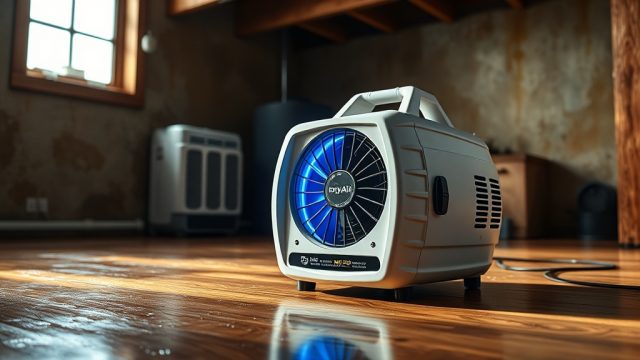
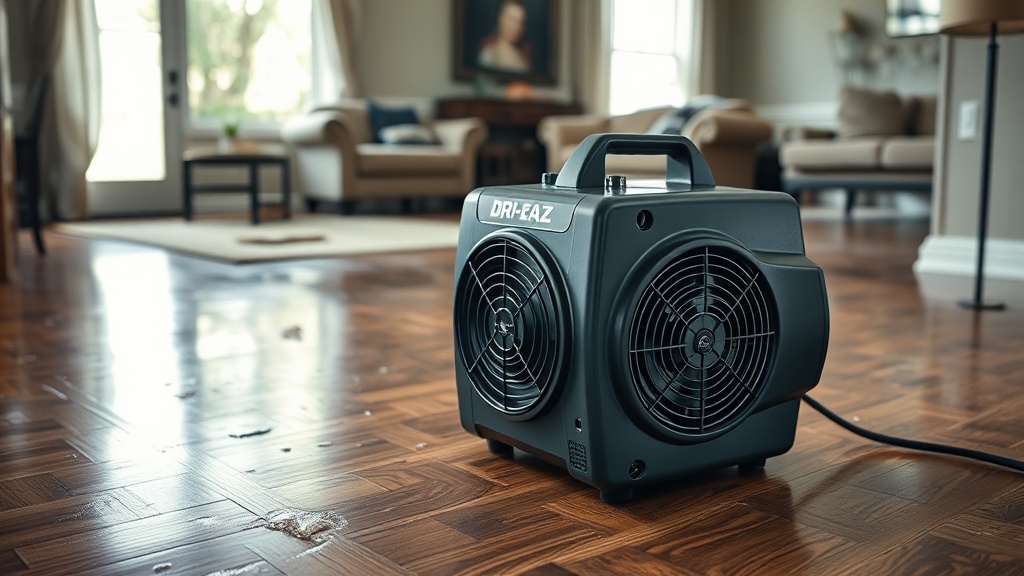
How Does the Dri-Eaz Phantom X2 Perform in Flood and Storm Scenarios?
Flood and storm recovery demands equipment that can handle extreme moisture loads, operate continuously for days, and accelerate drying without damaging building materials. The Dri-Eaz Phantom X2 Centrifugal Air Mover is a commercial-grade, high-velocity air mover designed specifically for professional water damage restoration. Operating at up to 1,675 CFM with three adjustable speed settings, this unit is built to move large volumes of air across wet carpet, hardwood, drywall, and structural cavities, significantly reducing drying time after storms or flooding events.
What Makes the Phantom X2 Different from Standard Air Movers?
The Phantom X2 distinguishes itself through a patented centrifugal design that produces concentrated, directional airflow rather than the diffuse, turbulent flow typical of axial fans. This design delivers air in a focused column that can be directed precisely at wet surfaces, improving evaporation rates by 30–40% compared to generic floor fans. The motor is thermally protected and sealed against moisture ingress, which is critical when operating in humid, debris-filled environments common in flood and storm recovery.
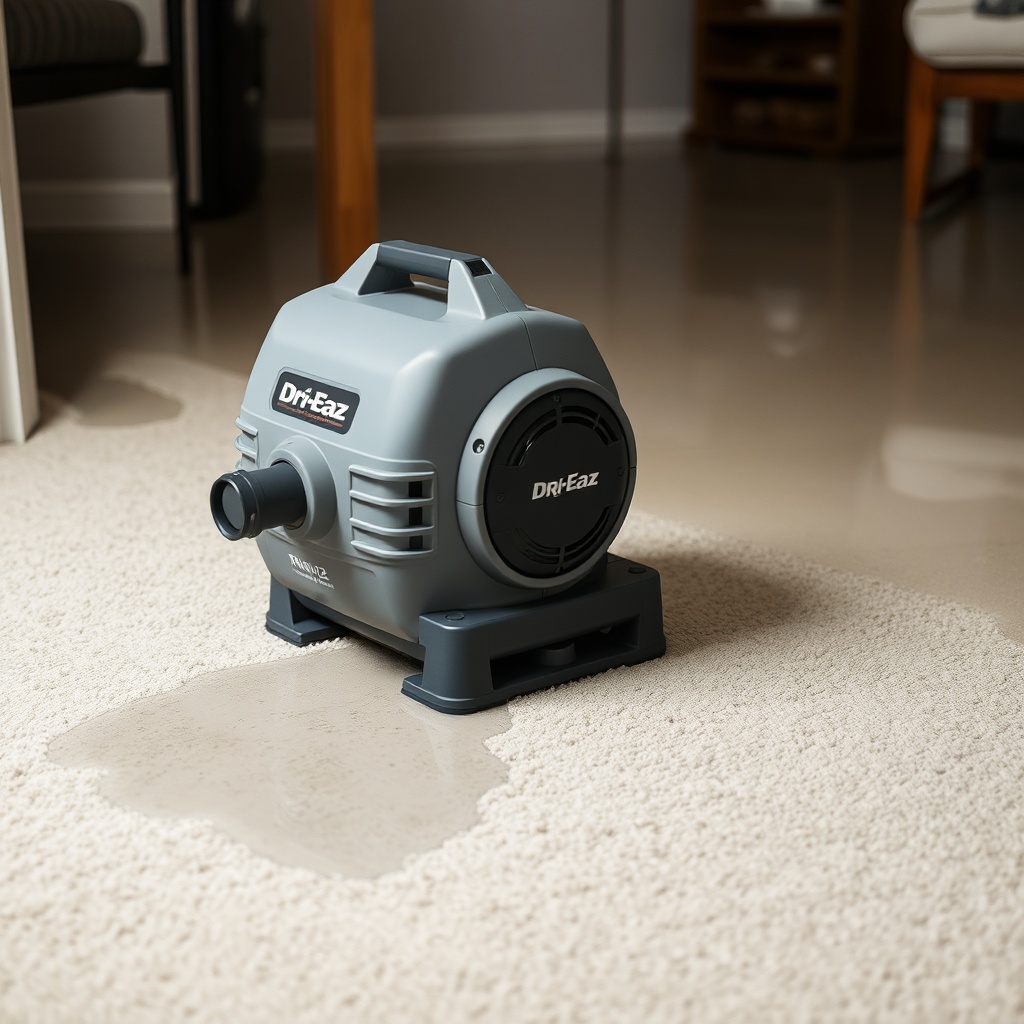
Additional differentiators include a low-profile design (only 8 inches high) that allows placement under furniture and low clearance areas, and a durable roto-molded polyethylene housing that resists cracking and corrosion from exposure to contaminated water. The unit also features an integrated cord wrap and ergonomic carrying handle, making it easier to move between rooms during multi-story storm restoration projects.
For a broader comparison of how this unit stacks up against competition for moisture control, see our full Dri-Eaz Phantom X2 Centrifugal Air Mover Review: Best for Moisture Control After Leaks?
What Specifications Matter for Flood Recovery?
When selecting an air mover for flood and storm recovery, three specifications dominate: airflow volume, energy efficiency, and noise level. Below is a detailed specification table for the Phantom X2 as it relates to heavy-duty restoration work.
| Specification | Value | Why It Matters for Flood Recovery |
|---|---|---|
| Airflow (CFM) | 1,040 (low) / 1,350 (medium) / 1,675 (high) | High CFM moves more wet air away from surfaces, accelerating evaporation. |
| Motor | 1/2 HP, 115V, thermally protected | Thermal protection prevents burnout during extended continuous operation. |
| Power Consumption | 3.8 Amps (low) / 4.8 Amps (high) | Lower amperage allows multiple units on a single circuit—critical in disaster zones. |
| Noise Level (dB) | 59 (low) / 68 (medium) / 78 (high) | Lower noise is manageable in occupied homes; still powerful for evacuation scenarios. |
| Weight | 28 lbs (12.7 kg) | Light enough for one-person carry between floors; heavy enough for stability. |
| Dimensions | 20.5 x 16.5 x 8 in (52 x 42 x 20 cm) | Low profile fits under furniture and into tight spaces flooded by storm surge. |
| Speed Settings | 3 (low, medium, high) | Flexibility for different materials—low for hardwood, high for carpet. |
| Warranty | 2 years (limited) | Professional-grade reliability with coverage for rugged use. |
How Does Airflow Direction Affect Drying Time After Flooding?
Floodwater saturates porous materials unevenly, and simply moving air in a general direction is insufficient. The Phantom X2’s centrifugal impeller produces a steady, laminar air stream that can be aimed at walls, baseboards, and subflooring. Restoration technicians frequently use Dri-Eaz Phantom X2 Centrifugal Air Mover: A Must-Have for Mold and Moisture Control? as part of a containment and directional drying system, creating negative pressure zones that pull moisture from deep within structures.
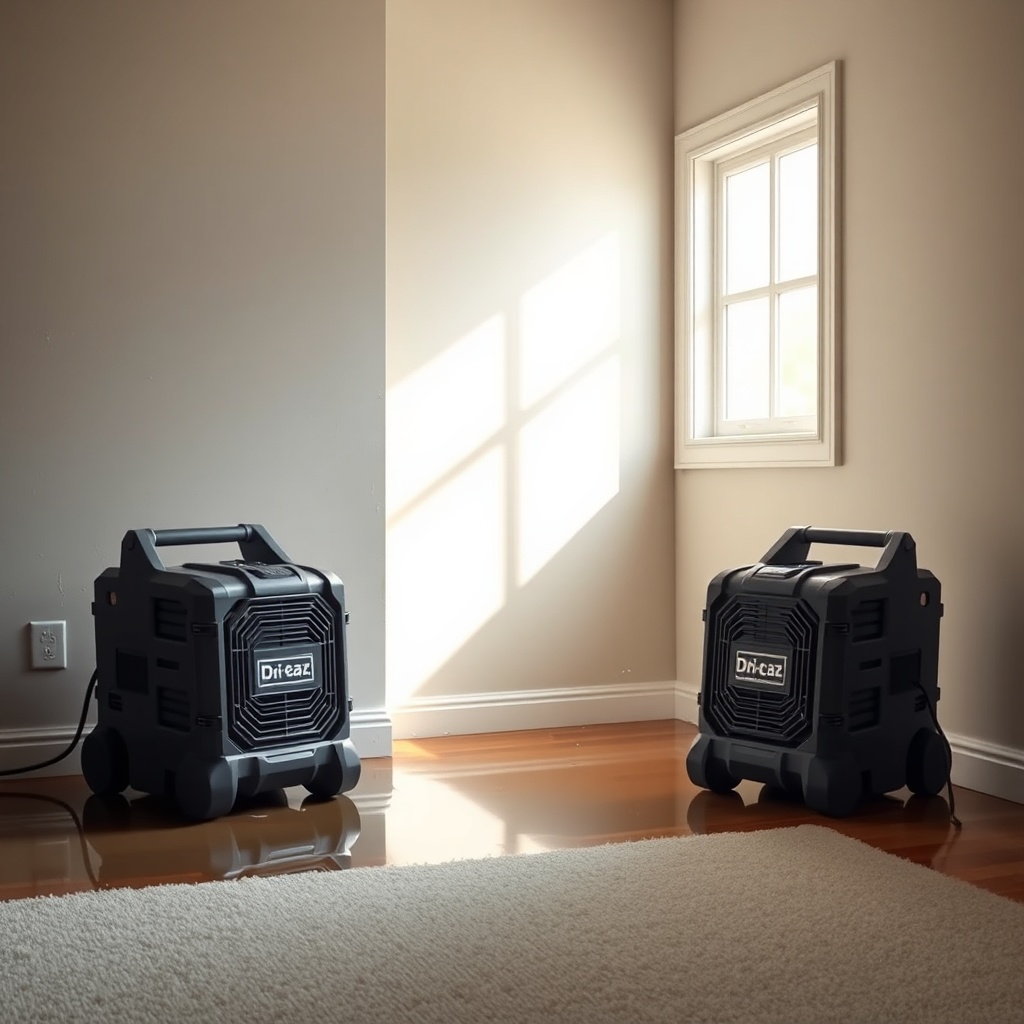
In practice, the unit is placed 18 to 24 inches from wet surfaces at a 45-degree angle to maximize surface evaporation without blowing debris into untouched areas. The focused airflow is especially effective for drying wall cavities after storm-driven rain intrusion or floodwater that has wicked up drywall. The fan can also be positioned to create cross-flow ventilation across large open areas like flooded basements or ground-level storm shelters.
Can the Phantom X2 Operate in Severe Flood Conditions?
Yes, but with important precautions. The Phantom X2 is rated for indoor use only and should not be submerged or exposed to direct water spray. However, its sealed motor and corrosion-resistant components allow it to operate in humid environments up to 95% relative humidity without performance degradation. In Category 2 or Category 3 floodwater scenarios (greywater or blackwater), the unit’s exterior can be easily wiped down and disinfected using standard bleach or quaternary ammonium solutions, as the polyethylene shell is non-porous.
For leak detection applications where water involvement is minimal but moisture migration is prevalent, the unit remains essential. Check our Dri-Eaz Phantom X2 Centrifugal Air Mover for Leak Detection: A Comprehensive Review for insights on using the Phantom X2 for drying hidden leaks.
Professionals should always use GFCI-protected circuits and inspect the power cord for damage before deploying units in wet conditions. The low amperage draw (under 5 amps on high) means five Phantom X2 units can run on a single 15-amp household circuit, enabling dense staging in large storm-damaged properties without tripping breakers.
What Do Restoration Professionals and Homeowners Say?
Feedback from flood restoration contractors and homeowners who have used the Phantom X2 during storm recovery is overwhelmingly positive. The most commonly cited benefits are reliability over long drying cycles, quiet operation compared to axial fans, and the unit’s ability to dry hardwood floors without cupping. One restoration project manager in Houston reported running 12 Phantom X2s continuously for 72 hours after Hurricane Harvey with zero failures—a level of durability that other fan brands could not match.
Homeowners who purchased the unit for personal storm readiness noted its lightweight design and easy storage. A common remark is that the unit “moves more air than any big box store fan” and “can dry a wet carpet in hours instead of days.” The only consistent criticism is the price point, which ranges from £199 to £259 (approximately $250–$325 USD) depending on retailer, making it a significant investment for a single-unit homeowner. However, for professional restoration firms, the cost is offset by reduced drying time and fewer callbacks.
Frequently Asked Questions
How many Dri-Eaz Phantom X2 units do I need for a flood-damaged room?
For a standard 12′ x 12′ room with saturated carpet and pad, professionals typically deploy two to three Phantom X2 units to create adequate airflow. For larger storm-damaged areas (e.g., 800 sq ft basement), six to eight units may be required, depending on material type and ventilation.
Can the Phantom X2 be used to dry walls after a burst pipe?
Yes. Place the unit 2–3 feet from the wall at a 45-degree angle to direct air into the wall cavity. For best results, open outlet covers and remove baseboards to allow airflow behind the wall surface.
What is the maximum temperature the Phantom X2 can withstand?
The unit is designed for ambient temperatures between 32°F (0°C) and 104°F (40°C). Operating outside this range may degrade motor life or cause overheating in the thermal protection circuit.
Is the Phantom X2 suitable for outdoor use during storm cleanup?
No. The Phantom X2 is rated for indoor use only. For outdoor drying of flooded patios, decks, or vehicles, use a weatherproof axial fan. The unit can be used in covered garages or porches as long as it remains dry.
How often should I clean the air mover during flood recovery?
In flood and storm environments, clean the intake grille and impeller blade assembly every 8–12 hours of operation. Dust, mud, and debris buildup reduces airflow by up to 25% and increases motor strain. Use a soft brush or compressed air.
Does the Phantom X2 come with a power cord?
Yes. The unit includes a 25-foot (7.6 m) heavy-duty power cord with a grounded plug. The cord length is sufficient for most residential and commercial restoration layouts without requiring extension cords.