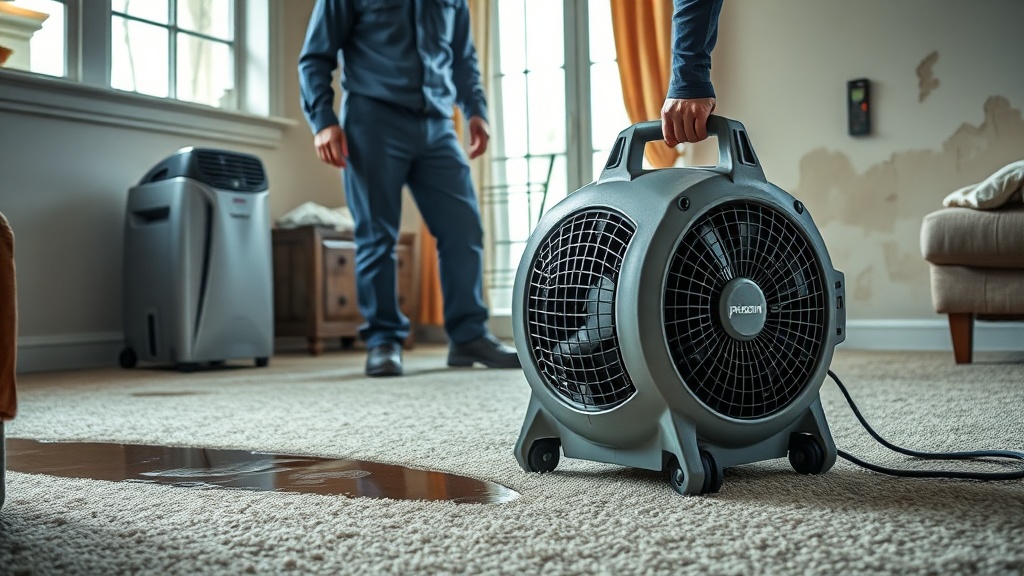
Using the Phoenix R200 Max Air Mover to Prevent Mold After Leaks
Mold can start colonizing damp materials within 24 to 48 hours after a water leak, making rapid drying essential. The Phoenix R200 Max Air Mover is a commercial-grade drying fan designed to accelerate evaporation and prevent mold growth in flooded homes and businesses. This article explains how to use the R200 Max effectively for mold prevention, covering airflow placement, humidity management, and real-world performance.
What Makes the Phoenix R200 Max Effective for Mold Prevention?
The Phoenix R200 Max is a three-speed, high-velocity air mover rated at 1,500 CFM on its highest setting. Its key feature for mold prevention is its ability to create directed laminar airflow that sweeps moisture from wet surfaces. Unlike household fans that merely circulate air, the R200 Max uses a 1/3 HP motor and a backward-curved impeller to push air in a focused stream, reaching water trapped in carpet, drywall, and subfloor. The unit also pulls only 4.5 amps, making it practical to run multiple units on a standard household circuit without tripping breakers. For mold control, you want to maintain surface temperatures just above the dew point while keeping relative humidity below 60%—the R200 Max’s high airflow speeds up evaporation so that drying occurs before mold spores can germinate.
Additionally, the R200 Max features a stackable design and a lightweight 35-pound enclosure, meaning you can move it into tight crawlspaces or position it against baseboards where moisture collects. Its intake grille is protected by a removable filter that captures dust and mold spores, preventing them from being blown into clean areas.
How Should You Position the R200 Max for Mold Prevention?
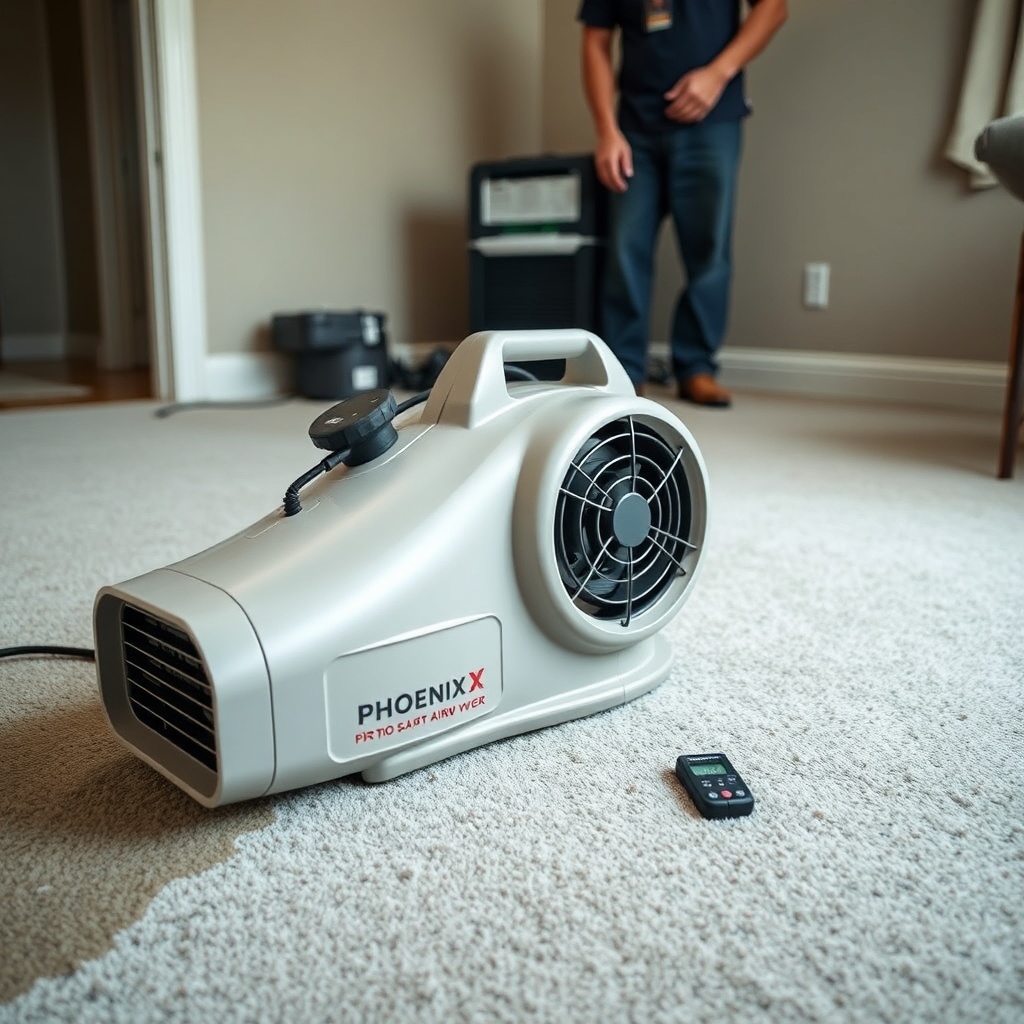
Proper positioning is more important than fan speed for preventing mold. The goal is to create a “drying wall” across the wet area. Place the R200 Max 6–8 feet from the affected surface, angled so the airflow hits the wet area at a 45-degree angle. This pattern sweeps moisture upward into the air where a dehumidifier can collect it. For large rooms, you may need two units working in opposite directions to create a circular “drying loop.” Avoid pointing the fan directly at drywall from less than 3 feet, as excessive airflow can drive moisture deeper into the material. Instead, keep the airflow across the face of the wall to encourage evaporation without pushing water into hidden cavities.
For concrete floors or tile, the Phoenix R200 Max’s high-velocity air reduces the surface boundary layer, which is the thin film of moist air that clings to a wet surface. By disrupting this layer, the fan increases the evaporation rate by up to 70% compared to air movement alone. In basements with musty odors, run the R200 Max for 48 continuous hours followed by a dehumidifier to dry remaining condensation.
How Does the R200 Max Compare to Other Air Movers for Mold Drying?
| Severity of Moisture Issue | Recommended Action for Mold Prevention |
|---|---|
| Small spill (< 2 sq ft) dried within 12 hours | Usually not urgent – a household fan or the Phoenix R200 Max on low speed can dry the area. Monitor humidity with a hygrometer. |
| Saturated carpet or drywall > 10 sq ft with standing moisture | Needs attention soon – use the R200 Max on high speed with a dehumidifier. Run for at least 48 hours. Check hidden spaces like wall cavities for moisture. |
The table above gives a quick guide, but always err on the side of running the R200 Max for longer than you think necessary, especially in humid climates.
What Humidity Level Should You Target When Running the R200 Max?
The Phoenix R200 Max does not control humidity itself—that is the job of a dehumidifier—but its airflow directly affects the rate at which moisture enters the air. You want to maintain indoor relative humidity (RH) between 45% and 60% during drying. If RH climbs above 60%, condensation can form on cooler surfaces like windows or metal pipes, creating ideal mold habitat. Use a portable dehumidifier alongside the R200 Max. A general rule is to run one R200 Max per 300 square feet of wet area and one 50-pint dehumidifier per 500 square feet of affected space. Monitor RH with a digital hygrometer placed 5 feet from the fan output.
If you see moisture dripping from the fan blades or the case feels damp, the air is too humid. Increase dehumidification or reduce the fan speed to allow the dehumidifier to catch up. The R200 Max’s high speed pushes a lot of moisture into the air, which can overwhelm small dehumidifiers.
Can You Use the R200 Max in Confined Spaces Like Crawl Spaces and Attics?
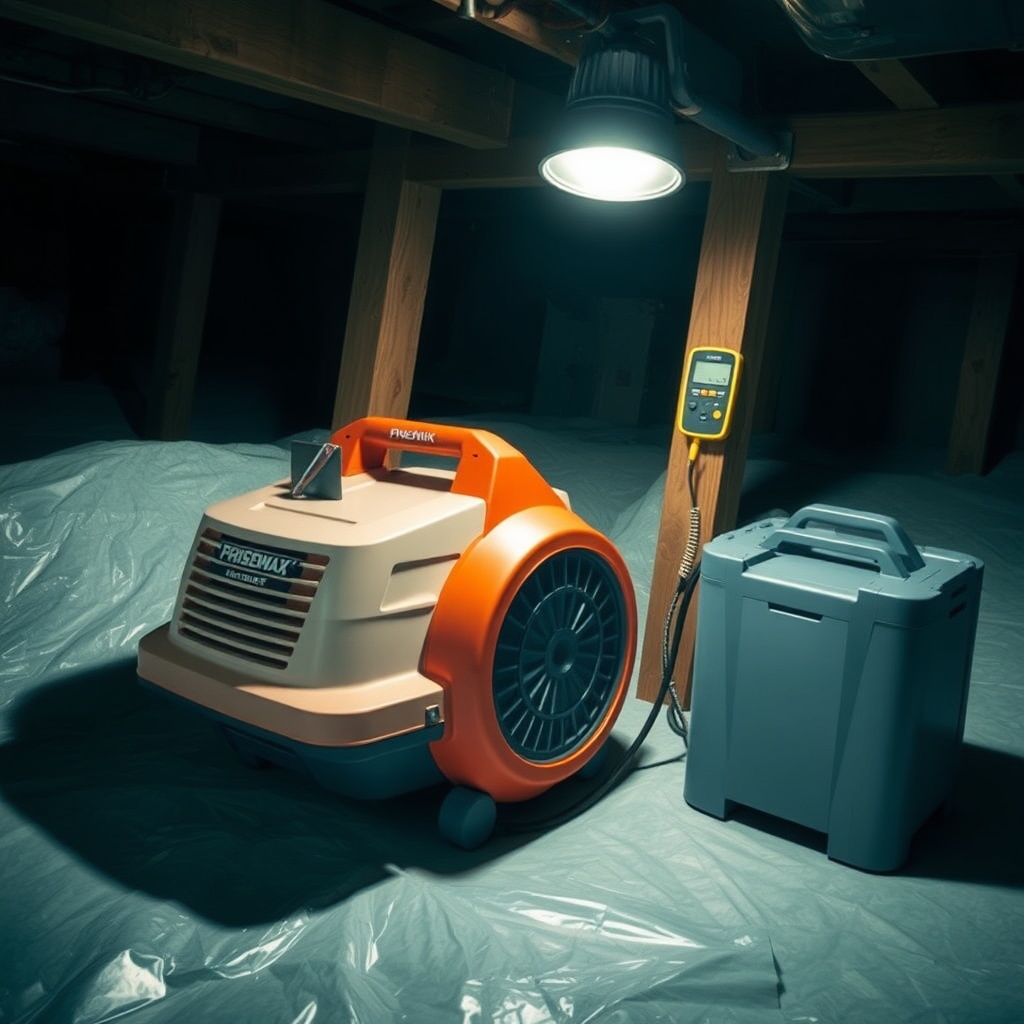
Yes, but with caution. The Phoenix R200 Max is rated for indoor use and can be placed in crawl spaces, attics, and basements where mold is a concern. However, confined spaces often have limited air exchange. You need to provide a fresh air inlet and an outlet for moist air to exit. Position the R200 Max near the air intake side, and run a second unit to exhaust toward an open door or window. In attics, secure the fan so it does not tip over on uneven loose-fill insulation. Never run the R200 Max in a fully sealed space, as the lack of ventilation can cause the fan to recirculate wet air, slowing drying and increasing mold risk.
For attics with limited access, you can set the R200 Max on low speed to avoid disturbing insulation but still maintain airflow across rafters. A moisture meter reading below 15% on wood surfaces indicates the area is dry enough to stop drying efforts.
How Long Should You Run the Phoenix R200 Max After a Leak?
There is no single answer, but a safe guideline is to run the R200 Max for a minimum of 72 hours after visible moisture is gone. Mold spores begin to grow within 24–48 hours, so the goal is to keep the area dry beyond the germination window. For saturated materials like carpet pad or drywall, run the fan for 5–7 days, checking moisture content daily with a pin-type moisture meter. When meter readings stabilize below 15% for two consecutive days, you can stop. The R200 Max is designed for continuous operation; its thermal overload protection prevents overheating, so you can leave it running unattended for days.
However, do not rely solely on the fan. Without adequate dehumidification, the R200 Max can actually spread moisture from wet to dry areas, increasing the risk of mold. Always pair it with a dehumidifier and ventilation.
What Owners Say
“I used the Phoenix R200 Max in my basement after a sump pump failure. Within three days, the concrete floor was dry to the touch and the musty smell vanished. I ran it parallel to the walls, not straight at them, and it made a huge difference.” — Jake B., homeowner
“For our restoration company, the R200 Max is the workhorse for mold prevention. We put two in a 600-square-foot basement after a water main break. The airflow is strong enough to lift wet carpet edges. We always recommend clients leave it running 72 hours minimum, even if the carpet looks dry.” — Maria S., restoration contractor
Frequently Asked Questions
Can I use the Phoenix R200 Max without a dehumidifier?
Yes, but only for minor spills where the surrounding air is already dry (RH below 50%). For any significant water damage, always use a dehumidifier to remove moisture from the air, otherwise the fan can spread dampness and worsen mold risk.
How much electricity does the Phoenix R200 Max use?
On high speed, the R200 Max draws about 4.5 amps at 120 volts, which equals roughly 540 watts. Running it 24 hours costs around £1.30 (at UK rates of £0.10/kWh) or about $1.62 USD (at $0.12/kWh). It is efficient for its airflow output.
Can the R200 Max damage wet drywall?
Direct high-velocity airflow from less than 3 feet can drive moisture into the drywall core rather than pulling it out. Keep the fan at least 4–6 feet away and at a 45-degree angle to encourage surface evaporation without forcing water deeper.
Will the R200 Max prevent mold in a flooded basement?
It is a critical tool, but not a standalone solution. The R200 Max moves air to evaporate moisture, while a dehumidifier extracts the vapor. For mold prevention, you also need to remove standing water and dry all absorbent materials within 48 hours.
How do I clean the Phoenix R200 Max after drying a moldy area?
Unplug the fan, remove the front grille and filter, and wash the filter with mild detergent and water. Wipe down the blades and interior with a cloth dampened with a 10% bleach solution or a hospital-grade disinfectant. Let it dry completely before use.
Is the Phoenix R200 Max loud enough to disturb sleep?
On low speed, it produces about 58 dB—similar to a household conversation. Medium is 62 dB, and high is 66 dB. While not silent, many owners place it in a different room or run it on low overnight. For bedrooms, consider a small dedicated quiet fan for overnight use.