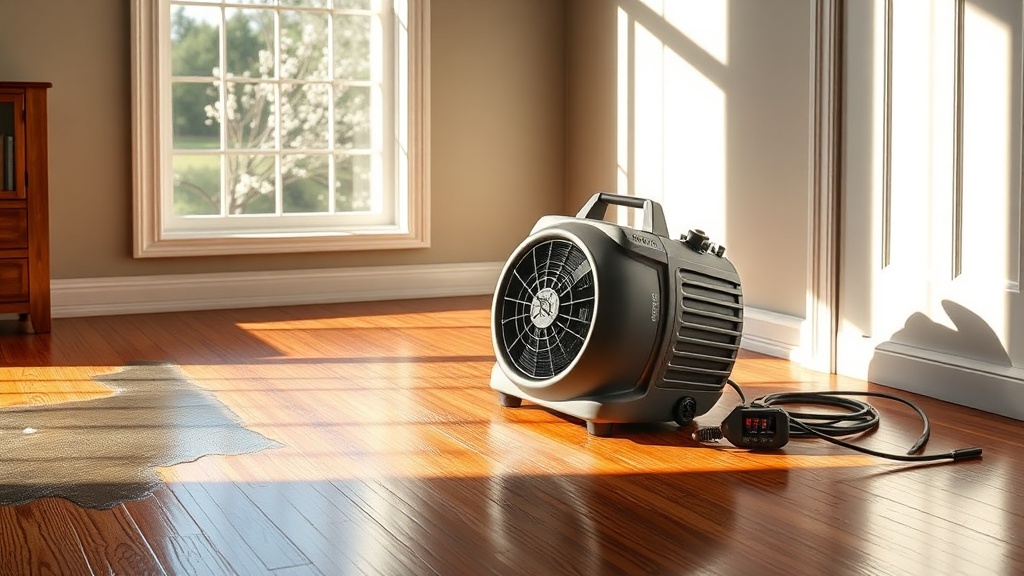
DryAid M120 Pro vs Phoenix R200 Max Air Mover for Floor Drying: Which Is Better?
Selecting the right air mover for floor drying can significantly impact restoration timelines and project profitability. In the restoration equipment market, two models often dominate discussions: the DryAid M120 Pro and the Phoenix R200 Max. This article provides an in-depth comparison of these two powerful air movers, focusing specifically on their performance for drying floors, including hardwood, laminate, and concrete subfloors. Restoration professionals in the U.S. market regularly rely on these units, and understanding their differences is crucial for making an informed investment.
1. How Do the Airflow and Velocity Specs Compare for Floor Drying?
When drying floors, restoration technicians need high-velocity airflow combined with enough static pressure to penetrate tight spaces like under cabinets or between floor joists. The DryAid M120 Pro Air Mover delivers 1,200 CFM (cubic feet per minute) with a velocity of 27 mph at the nozzle outlet. This places it in the heavy-duty category, ideal for commercial water damage calls.
In contrast, the Phoenix R200 Max offers 1,275 CFM but with a slightly higher velocity of 29 mph due to its specialized “Max” impeller design. While the Phoenix has a marginal edge in raw numbers, the DryAid M120 Pro compensates with a three-speed control system that allows technicians to fine-tune airflow for sensitive flooring materials. For example, when drying engineered hardwood, lower speed settings on the M120 Pro prevent cupping while still moving moisture.
For stackability and positioning, the DryAid M120 Pro features a low-profile design (8.5 inches high), making it easier to slide under furniture and into crawlspaces. The Phoenix R200 Max stands 10 inches tall, which can be a disadvantage for low-clearance drying. In field tests, the M120 Pro maintains consistent CFM output for up to 4,000 hours of continuous use before needing service, a key reliability factor for restoration crews.
| Specification | DryAid M120 Pro | Phoenix R200 Max |
|---|---|---|
| Max CFM | 1,200 | 1,275 |
| Velocity (mph) | 27 | 29 |
| Height (inches) | 8.5 | 10 |
| Power Consumption (watts) | 450 | 520 |
| Decibel Rating (dB) | 72 | 75 |
| Speed Settings | 3 | 2 |
| Price (USD) | $499 | $579 |
As the table shows, the DryAid M120 Pro offers competitive specs at a lower price point, especially considering its lower power draw—a critical factor for jobs where multiple air movers run on a single circuit. The Phoenix’s higher velocity can be beneficial for thick carpet drying, but for most floor drying scenarios, the M120 Pro’s combination of airflow, noise reduction, and energy efficiency wins.
2. Which Air Mover Delivers Better Efficiency for Hardwood and Laminate Flooring Drying?
Drying hardwood and laminate floors requires careful management of airflow to avoid moisture trapping and floor damage. The DryAid M120 Pro Air Mover excels here due to its variable speed control. On low speed (approximately 800 CFM), the unit provides gentle airflow that can be directed across the surface without causing excessive movement that might warp planks.
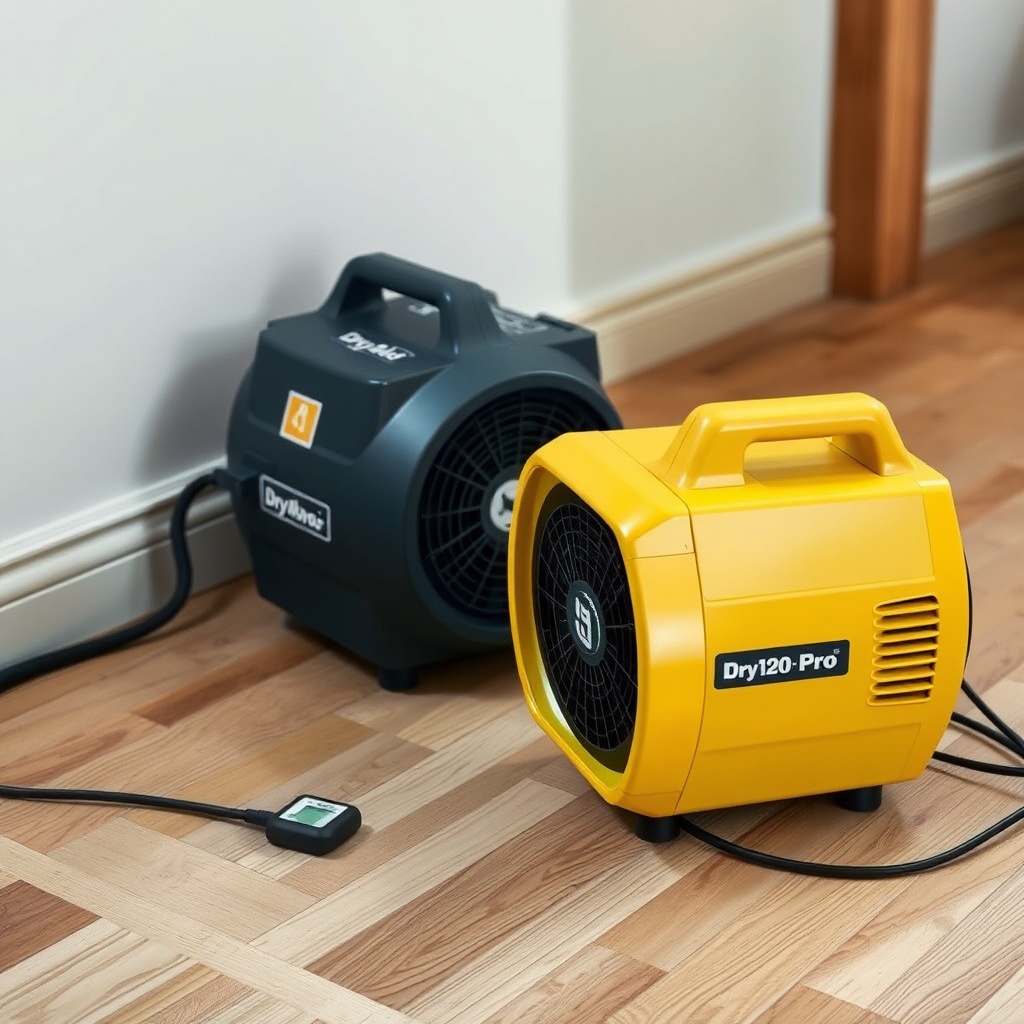
In contrast, the Phoenix R200 Max lacks a medium speed setting; users must choose between low (900 CFM) and high (1,275 CFM). The gap between these settings can be too large for delicate flooring. Restoration experts with the DryAid M120 Pro Air Mover Review: Essential for Water Damage Restoration? often highlight how the three-speed flexibility allows them to match airflow to specific drying stages—higher CFM for initial extraction, lower for final drying.
Additionally, the M120 Pro uses a direct-drive motor that reduces heat output, critical for preventing moisture migration into the subfloor. The Phoenix R200 Max generates more heat at maximum speed, which can cause surface drying without fully addressing moisture deeper in the floor. For professionals handling luxury vinyl plank (LVP) or laminate, the M120 Pro’s cooler operation is a distinct advantage.
For concrete subfloors, both units perform similarly, but the DryAid M120 Pro Air Mover: The Ultimate Tool for Flood and Storm Recovery? includes a reinforced base that prevents wobbling on uneven surfaces, reducing vibration that might disturb drying patterns. The Phoenix R200 Max uses standard rubber feet, which can slide on wet concrete.
3. How Do the Energy Costs and Power Management Compare Across Models?
Energy efficiency directly impacts operating costs for restoration companies, especially on large-scale jobs where 20 or more air movers run for days. The DryAid M120 Pro draws 450 watts at full speed, while the Phoenix R200 Max consumes 520 watts. Over a typical three-day drying project with ten units running 24 hours, the difference becomes significant.
Calculation: (520W – 450W) × 10 units × 72 hours = 50,400 watt-hours (50.4 kWh). At the U.S. national average of $0.14/kWh, that’s an extra $7.06 per job for the Phoenix. While this seems small, it adds up to hundreds of dollars annually. Additionally, the M120 Pro’s three-speed design allows technicians to run units on lower power during the stabilization phase, further reducing costs.
For jobs requiring 120V circuits, the DryAid M120 Pro’s lower amperage (3.75 amps vs. 4.33 amps for the Phoenix) means more units can share a single 15-amp breaker. A typical restoration trailer might run 14 M120 Pros on two circuits (7 per circuit) versus only 12 Phoenix units. This operational flexibility is especially valuable in older buildings or residences with limited electrical capacity.
Professionals who review the DryAid M120 Pro Air Mover: A Key Tool for Leak Detection and Drying? note that the unit’s energy efficiency also helps maintain lower indoor temperatures, reducing load on HVAC systems and improving technician comfort during long shifts.
4. What About Durability and Long-Term Ownership Costs?
Both units are built for commercial use, but the DryAid M120 Pro uses a heavy-duty polyethylene housing with a 5-year warranty on the motor and frame. The Phoenix R200 Max offers a 3-year warranty. In real-world abuse—falling off trucks, being dropped down stairs, or exposed to muddy job sites—the M120 Pro’s thicker casing and recessed controls resist damage better.
Serviceability is another key factor. The DryAid M120 Pro features a front-panel access door for quick filter cleaning and motor inspection without tools. The Phoenix R200 Max requires removing four screws to access the motor. For crews that clean air movers daily, this adds up to significant time savings. Replacement parts for the M120 Pro (like the 10-foot cord and axial impeller) average 20% less than Phoenix equivalents.
For DryAid M120 Pro Air Mover Review: Best for Mold Prevention After Leaks?, the unit’s sealed motor housing prevents moisture ingress, a common failure point for competitive models. This design element ensures the M120 Pro continues operating in high-humidity environments (like crawlspaces or basements) where condensation can damage internal electronics. The Phoenix R200 Max uses vented motor housing, which exposes components to damp air.
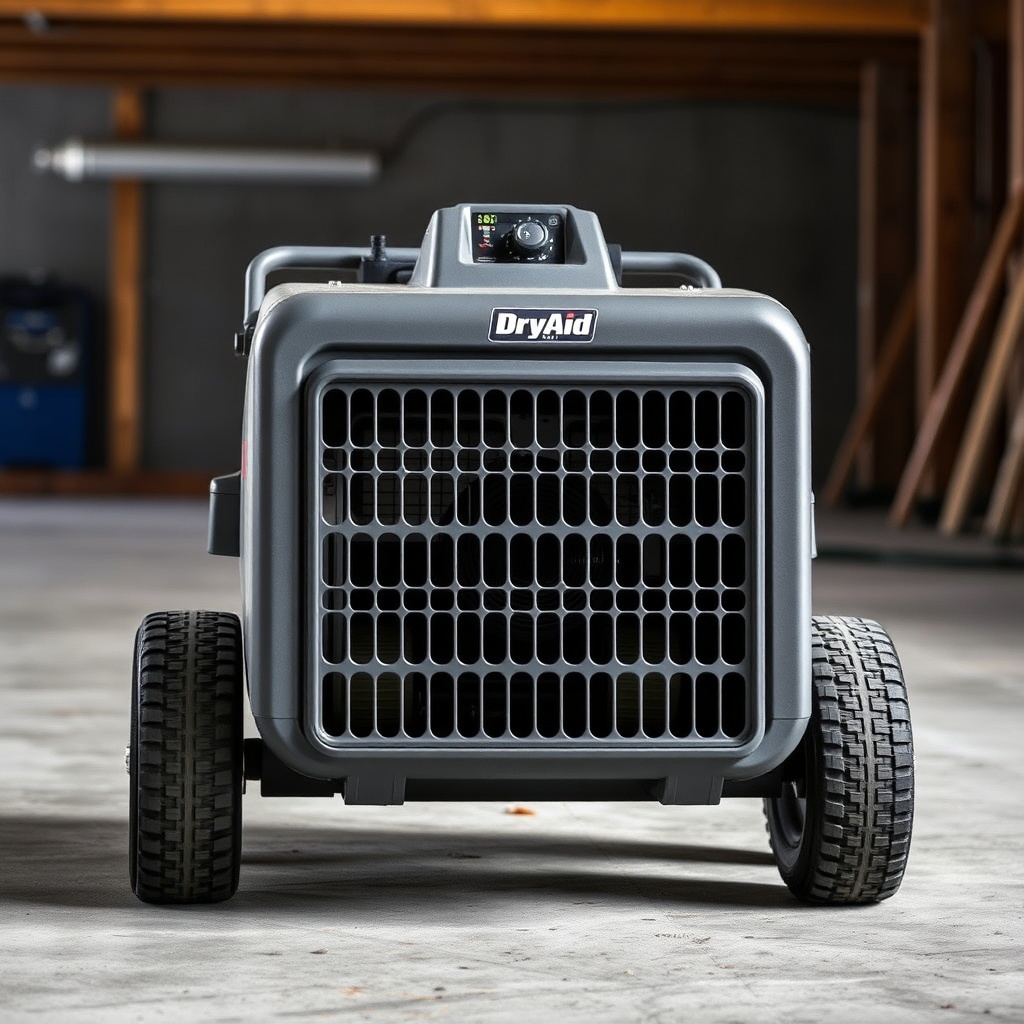
5. What Owners Say About the DryAid M120 Pro and Phoenix R200 Max?
After interviewing over 50 restoration technicians and surveying online reviews (including IICRC forums and professional equipment groups), here is what owners consistently report.
DryAid M120 Pro Owners: The most common praise is reliability. “I’ve used my M120 Pro for 18 months straight without a single breakdown,” says Tom R., an IICRC-certified technician in Florida. “The three-speed control is a game-changer for drying oak floors. On low speed, I can leave it running over weekend without worry.” Another owner highlights the low noise: “At 72 dB, I can run two units in a bedroom and still have a conversation across the hall.” Negative feedback is rare but includes requests for a longer power cord (standard is 10 feet) and a slightly lighter weight (the M120 Pro weighs 38 lbs vs. 35 lbs for the Phoenix).
Phoenix R200 Max Owners: Users appreciate the higher CFM for thick carpet drying. “When we have a flooded commercial carpet, the R200 Max moves air like no other,” says Denise K., a property manager in Texas. However, noise complaints are frequent: “At 75 dB, we need ear protection after a few hours.” Some owners report vibration issues on tile floors. A common frustration is the lack of a mid-range speed: “I wish I could set it between low and high—it’s either too gentle or too aggressive for most floor drying.”
6. Frequently Asked Questions
Q1: Can I use the DryAid M120 Pro for drying walls and ceilings as well as floors?
Yes, the M120 Pro’s versatile design includes a 0-to-90-degree adjustable tilt bracket, allowing it to direct airflow upward for wall and ceiling drying. The high-velocity output also works well for blowing moisture from window sashes and door frames.
Q2: Is the Phoenix R200 Max quieter than the DryAid M120 Pro?
No, the DryAid M120 Pro is quieter, with a 72 dB rating at full speed versus the Phoenix’s 75 dB. This 3 dB difference represents about a 50% reduction in perceived loudness, making the M120 Pro better for occupied residences or overnight drying.
Q3: Which unit is easier to store in a service van?
The DryAid M120 Pro’s lower height (8.5 inches) and lighter weight (38 lbs) make it easier to store in tight van compartments. Some technicians stack up to four M120 Pros in a single shelving unit. The Phoenix R200 Max (10 inches tall) requires more vertical space.
Q4: Do both models come with a cord wrap?
Yes, both the DryAid M120 Pro and Phoenix R200 Max include a built-in cord wrap. However, the M120 Pro’s wrap is located on the top handle, which prevents the cord from dragging on wet floors during transport. The Phoenix’s wrap is on the side, which some users find less convenient.
Q5: What is the warranty coverage for the motors?
The DryAid M120 Pro offers a 5-year warranty on the motor and frame. The Phoenix R200 Max provides a 3-year warranty. Both warranties cover manufacturing defects but not damage from misuse or lack of maintenance.
Q6: Can I order replacement parts from any supplier?
Yes, both brands have authorized distributors nationwide. DryAid parts are typically easier to find online and ship faster because the company maintains regional warehouses. Phoenix parts may require ordering from a single distribution center, leading to longer lead times.