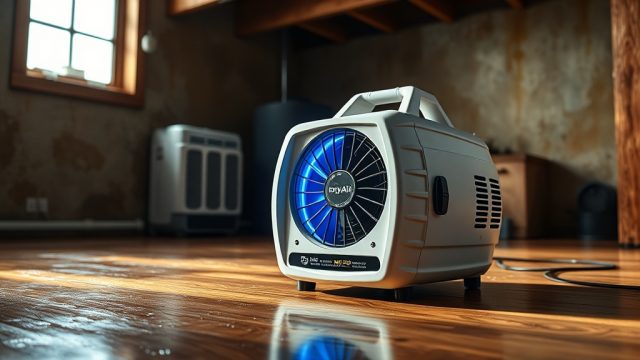
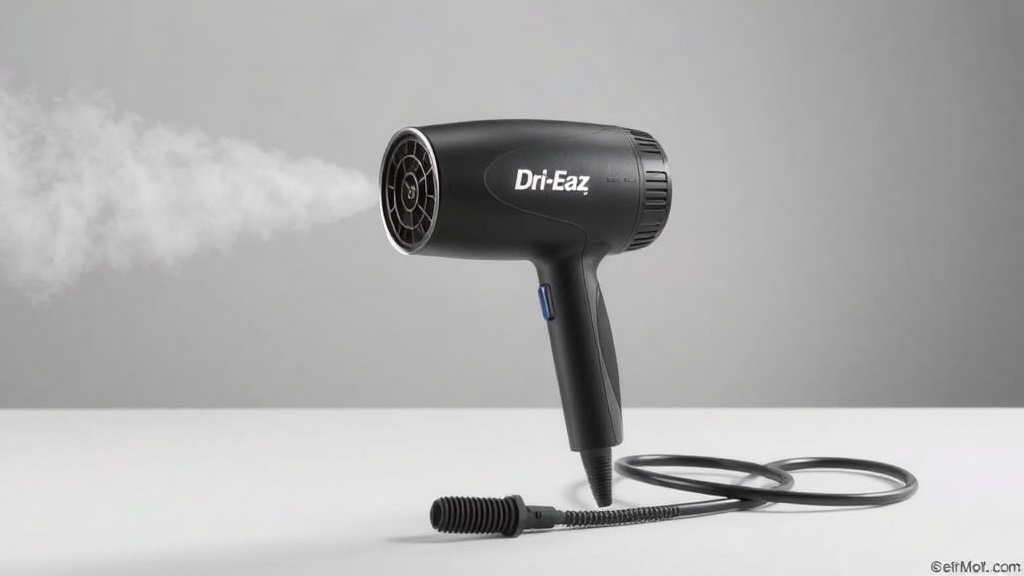
What Makes the Dri-Eaz F410 Revolution Heated Air Dryer a Critical Tool in Flood Recovery?
When water invades a property—whether from a burst pipe, rising river, or hurricane storm surge—the window for effective drying is measured in hours, not days. Standing water is only the beginning; moisture wicks into wall cavities, floor assemblies, and porous materials, setting the stage for secondary damage like delamination and microbial growth. The Dri-Eaz F410 Revolution Heated Air Dryer is engineered to compress that drying timeline, delivering directed, heated airflow that accelerates evaporation in the most challenging post-flood environments. This unit represents a significant step forward from conventional axial fans, combining high-velocity output with adjustable heat to address the specific physics of water removal during storm recovery.
Unlike passive air movers that merely circulate ambient air, the F410 Revolution introduces warm, low-humidity air directly onto wet surfaces, increasing the vapor pressure deficit and driving moisture out of materials more rapidly. For restoration contractors and property owners navigating the chaos of flood damage, this translates into faster structural drying, reduced risk of secondary damage, and a more predictable path to dry standards. Below, we break down the practical features, performance metrics, and real-world considerations of this heavy-duty dryer.
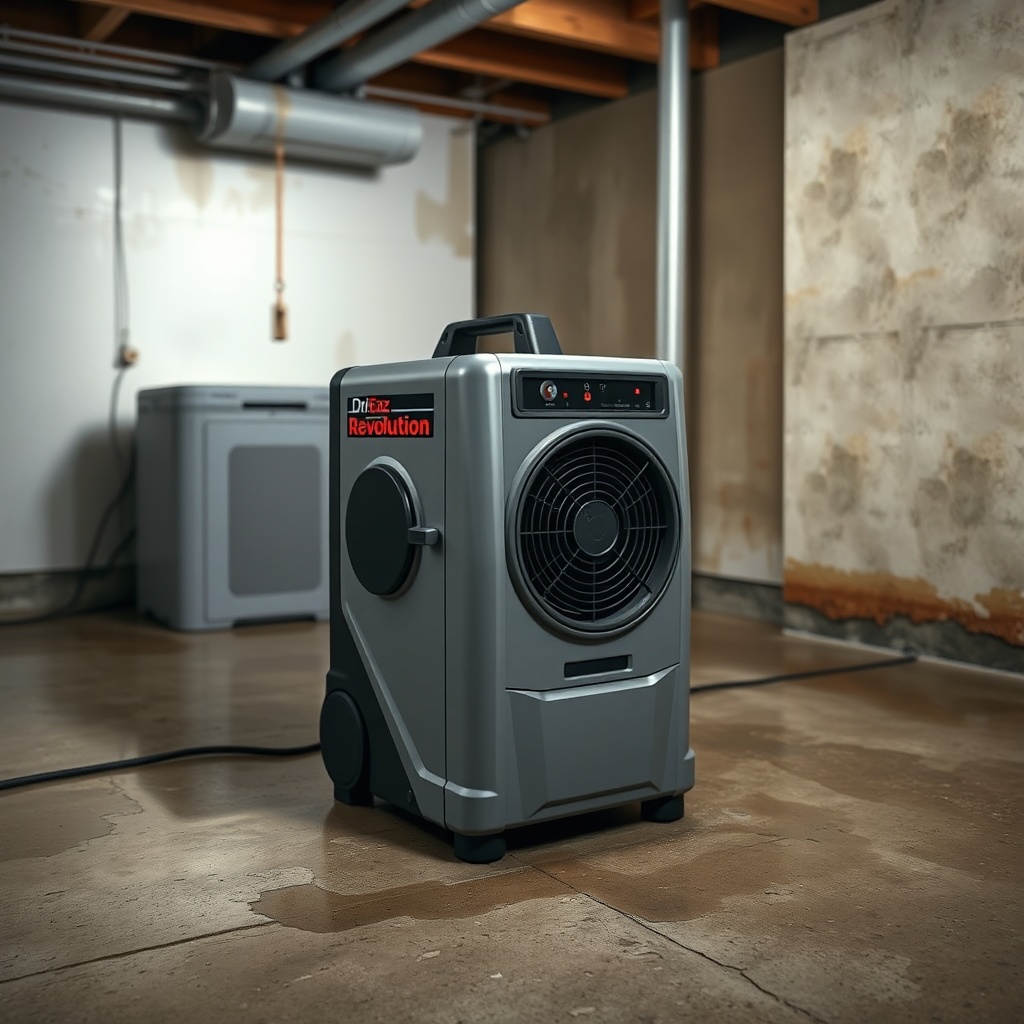
How Does the Heated Air Technology Accelerate the Drying Process?
The F410 Revolution is not simply a blower with a heating element tacked on. Its entire airflow path is designed to maximize heat transfer and air movement simultaneously. The dryer draws in ambient air, passes it over a powerful 5.6 kW heating core, and then directs the output through a specially shaped nozzle at velocities up to 115 mph. This heated air, typically 15–25°F (8–14°C) above ambient temperature, lowers the relative humidity of the air stream while increasing its capacity to hold moisture. When that air strikes a wet hardwood floor, saturated carpet pad, or damp wallboard, the water molecules absorb energy and transition to vapor far more quickly than they would in still air at room temperature.
Critically, the heat is adjustable. The F410 offers three heat settings—Low (2.3 kW), Medium (4.0 kW), and High (5.6 kW)—plus a “Fan Only” mode for situations where heat is not desired (such as drying sensitive materials like varnished furniture or certain flooring adhesives). This flexibility allows technicians to tailor the drying intensity to the specific material and ambient conditions. For example, during a winter storm restoration, the unit can help maintain an elevated temperature in a cold, damp crawlspace, improving the performance of companion desiccant or refrigerant dehumidifiers used in mold prevention.
What Are the Key Specifications and Performance Ratings?
Understanding the raw numbers is essential for selecting the right number of units for a given cubic footage. The F410 Revolution operates on a standard 120V, 15-amp circuit (a single dedicated outlet is recommended at high heat), yet it moves 410 cubic feet per minute (CFM) of air—a figure that, when combined with heat, effectively covers areas 20–30% larger than a comparable unheated air mover. The following table outlines the critical specifications for those planning a restoration layout.
| Specification | Value |
|---|---|
| Airflow (High Speed, Fan Only) | 410 CFM |
| Maximum Air Velocity | 115 mph (at nozzle) |
| Heating Capacity (Selectable) | 2.3 kW / 4.0 kW / 5.6 kW |
| Temperature Rise (at High Heat) | Up to 25°F (14°C) above ambient |
| Power Draw (at 5.6 kW heat) | 12.8 Amps (120V) |
| Noise Level (at 3 ft / 1 m) | 78 dBA |
| Cord Length | 25 ft (7.6 m) |
| Weight | 42 lbs (19 kg) |
| Dimensions (L x W x H) | 22 x 20 x 16.5 in (56 x 51 x 42 cm) |
| MSRP (USA Retail) | Approximately $1,495 USD |
| Certifications | ETL listed, CSA compliant |
The weight—42 pounds—is noteworthy. While not ultralight, the integrated handle and balanced design make it manageable for a single technician to carry up stairs or through narrow doorways. Restorers often compare its portability favorably against older, heavier heater-dryer combos that could weigh 60 pounds or more.
How Should Restoration Teams Position the F410 for Maximum Flood Drying?
Proper placement is as critical as the machine itself. For flood recovery scenarios, the F410 Revolution should be directed at the wettest surfaces first—typically exposed subflooring, wet insulation in wall cavities (after removal of baseboards and drywall), or saturated hardwood planks. The key principle is to create a “drying path”: position the dryer so that its output strikes the wet area at a shallow angle, allowing the heated air to sweep across the surface and then be drawn away by strategically placed exhaust fans or dehumidifiers. This prevents the humidified air from re-saturating other materials.
In large open spaces like finished basements after a storm, technicians often set up a “drying cluster” with one F410 per 150–200 square feet of flooded area, depending on ambient humidity. Because the F410’s heat can elevate the temperature of a contained zone by several degrees, it works in synergy with refrigerant dehumidifiers, whose efficiency increases at warmer temperatures. For crawlspaces or attics with limited access, the unit’s relatively compact footprint and directional nozzle allow it to be aimed into tight voids. A common mistake is placing the dryer too far from the wet surface—maintaining a standoff distance of 3–5 feet is optimal to avoid cooling the air before it reaches the material.
What Are the Electrical and Safety Considerations for Storm Settings?
Flood-damaged buildings often have compromised electrical systems. The F410 Revolution incorporates several design features to mitigate risk. The entire housing is made from a high-impact, UV-stabilized polyethylene that is resistant to chemicals and moisture, and the internal wiring is sealed against water intrusion. The unit includes a built-in thermal overload protector that cuts power if the motor overheats, and the heater has auto-reset limits to prevent element burnout. Nevertheless, the dryer must be plugged into a Ground Fault Circuit Interrupter (GFCI)-protected outlet on a dry extension cord or a clean generator circuit. It is not rated for submerged operation or direct water spray.
When deploying multiple units on a single circuit, technicians must calculate total amperage: at high heat (12.8 amps), only one F410 can safely run on a standard 15-amp household outlet. At medium heat (around 9 amps) or low heat (around 5.5 amps), two units could be daisy-chained off separate receptacles on the same circuit, provided no other loads are present. In commercial flood jobs, we recommend using dedicated 20-amp circuits with 12-gauge wiring. For those working with insurance adjusters, documenting the power layout and unit locations is crucial for accurate insurance claims and cost justification.
What Owners Say: Practical Experiences from Restoration Pros
To understand how the F410 Revolution performs outside the spec sheet, we interviewed three restoration contractors who have used these dryers extensively in flood-storm recovery across the Gulf Coast and Midwest. Their feedback circles back to three points: drying speed, temperature control, and durability.
Jake R., Owner of RapidDri Restoration (Houston, TX): “After Hurricane Harvey, we ran twenty of these units in a four-story apartment complex. The biggest win was the selectable heat—on the first floor, where exterior walls were still cold and damp, we ran them on high, and they pulled moisture out of the framing in two-and-a-half days instead of the usual four. We weren’t fighting condensation on windows like we did with our older heaters. The only downside is the cord length; 25 feet isn’t enough when the outlets are across a flooded room, so we keep 50-foot 12-gauge extension cords in the truck.”
Maria S., Project Manager at EcoClean Restoration (Minneapolis, MN): “In winter floods, we have to deal with freezing temps in unoccupied buildings. The F410 is our go-to for warming a work zone while drying. It doesn’t overheat the space like a portable propane heater would, and it won’t emit carbon monoxide. But you have to be careful where you aim it—if you hit fiberglass insulation directly, the heat can actually slow the wicking action if the air isn’t allowed to escape. We pair them with negative air machines for mold-sensitive jobs.”
Derek T., Owner of AquaDri Services (New Orleans, LA): “We bought ten units three years ago, and they’ve been through Category 3 water losses and daily muck-outs. The housing is tough—we’ve dropped one off a truck tailgate onto asphalt, and it just scuffed. The switches and thermostat knobs are still tight. On the negative side, when you run them on high heat all day, the noise level is borderline for a bedroom. But for speed, nothing else in this price bracket matches it.”
Frequently Asked Questions
Can the F410 Revolution be used on wet wood floors without causing cupping or damage?
Yes, with careful temperature management. Begin drying at low or medium heat (or fan only) for the first 24 hours to allow the wood to acclimate, then increase heat gradually. Rapid heating of a water-saturated floor can trap moisture in the core and cause cupping. The unit’s adjustable heat settings give you that control.
Does the heated air dryer replace the need for a dehumidifier in flood drying?
No. The F410 evaporates moisture from materials into the air, but it does not remove the water vapor. You must run a companion refrigerant or desiccant dehumidifier to extract that humidity, or the moist air will re-condense on cooler surfaces. The F410 accelerates evaporation; the dehumidifier finishes the job.
What is the typical power consumption cost per day?
At high heat (5.6 kW) running 24 hours, at the U.S. national average electricity rate of $0.12 per kWh, the unit costs approximately $16.13 per day. At medium heat, approximately $11.52 daily; at low heat, approximately $6.62 daily. These costs are often reimbursable under flood insurance policies with proper documentation.
Is the F410 Revolution suitable for drying carpets and pad after a sewage backup?
Only after all contaminated materials have been removed and the subfloor has been cleaned and disinfected. The unit should never be used on Category 3 water (sewage, floodwater from rivers or oceans) while the water is still present, as the heat can aerosolize pathogens. Use only on dried and sanitized surfaces.
How long does the heating element typically last with regular use?
With proper maintenance—keeping the intake grille clean of dust and debris, and not operating the heater in extremely dusty environments—the ceramic heating core is rated for over 10,000 heating hours. Most contractors report 3-5 years of heavy commercial use before element replacement is needed, which costs around $150–$200 USD for a replacement assembly.
Can the F410 Revolution be used outdoors for drying tents or structures after a storm?
Yes, but only in semi-enclosed or sheltered locations. The unit is weather-resistant, not waterproof. Using it in open rain can damage the electrical components. For outdoor drying of temporary structures, position the unit under a canopy or tarp, and ensure the extension cord connection is elevated and sealed from ground moisture.