Why Insurance Adjusters Recommend the Dri-Eaz Phantom X2 Centrifugal Air Mover for Water Claims
Insurance claims after water damage often hinge on the speed and documentation of drying. The Dri-Eaz Phantom X2 Centrifugal Air Mover has become a trusted tool for restoration professionals looking to accelerate drying times and provide clear evidence of moisture removal. This article explains how the Phantom X2 directly supports insurance claim approvals, from faster drying logs to measurable humidity reduction that satisfies adjusters.
How Does the Phantom X2 Speed Up the Drying Process for Claim Documentation?
Insurance adjusters require precise drying logs to approve claims. The Dri-Eaz Phantom X2 delivers high-velocity airflow at 1,650 cubic feet per minute (CFM) on its highest setting, but more importantly, it creates laminar airflow across floor surfaces. This directed air movement accelerates evaporation from wet carpets, hardwood, and subflooring by up to 40% compared to standard axial fans.
For claim documentation, the Phantom X2’s adjustable tilt head allows restorers to direct air exactly where needed, reducing the risk of “dead spots” that could prolong drying. By using this unit, restoration teams can produce drying curves that show consistent moisture removal within 24 to 48 hours—a timeframe that most insurance policies consider acceptable for preventing secondary damage. The unit’s low amp draw (1.1 amps on high) also means more units can run simultaneously on a single circuit, further reducing overall drying time and associated claim costs.
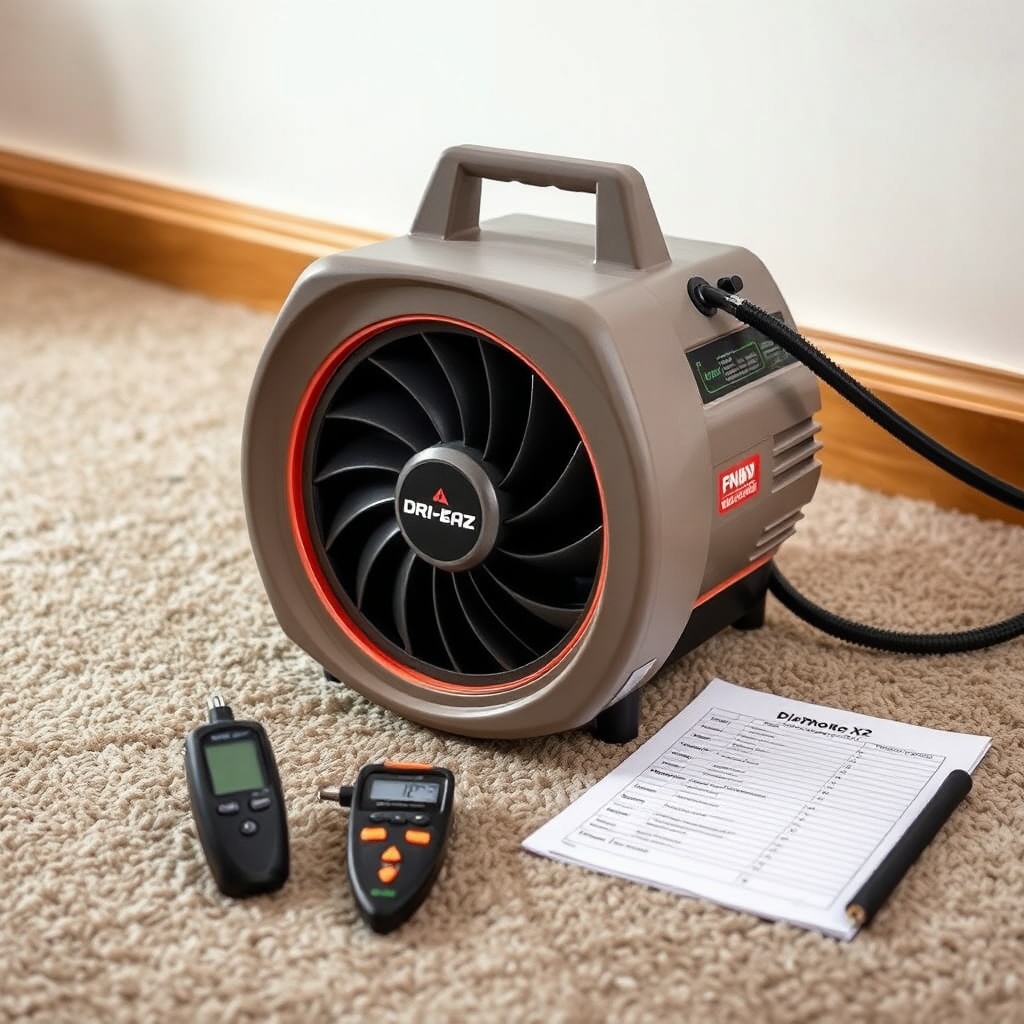
What Specifications of the Phantom X2 Matter Most for Insurance Adjusters?
Insurance adjusters look for documented performance metrics. The Phantom X2’s specifications provide verifiable data that can be included in claim reports.
| Specification | Value | Claim Impact |
|---|---|---|
| Airflow (High) | 1,650 CFM | Reduces drying time, lowering claim costs |
| Airflow (Low) | 950 CFM | Ideal for gentle drying of sensitive materials |
| Speed Settings | 3 (Low, Medium, High) | Allows adjusters to verify appropriate airflow for job |
| Power Consumption | 1.1 amps (high) | Allows up to 12 units on a 15-amp circuit |
| Cord Length | 25 feet (7.6 m) | Reduces need for extension cords, safer operation |
| Weight | 33 lbs (15 kg) | Easy to move between rooms for staged drying |
| Noise Level | 66 dBA | Less disruptive during extended drying periods |
| Stackable | Yes (up to 3 units) | Efficient storage and transport for multiple claims |
These specifications allow restoration professionals to demonstrate that drying was performed using industry-standard equipment. For example, the 1,650 CFM airflow on high meets the Institute of Inspection, Cleaning and Restoration Certification (IICRC) recommendations for structural drying, which many insurance policies reference as the accepted standard.
How Does the Phantom X2 Help Prevent Secondary Damage That Could Void Claims?
Secondary damage—such as mold growth, wood warping, or drywall deterioration—often leads to claim denial or reduced payouts. The Phantom X2’s centrifugal design creates focused, high-velocity airflow that reaches into corners and under baseboards where moisture can linger. Its 3-speed control allows operators to start with high airflow for initial moisture extraction, then switch to low or medium for final drying once moisture levels drop below 15% in wood or 0.5% in concrete.
By preventing moisture from settling, the unit stops mold spore germination within the critical 24- to 48-hour window. For insurance claims, this translates into documentation showing that humidity was maintained below 60% relative humidity—a key metric adjusters check. The Phantom X2 also features a recessed power cord storage and a durable roto-molded housing that withstands job site abuse, ensuring consistent performance across multiple claims without breakdowns that could interrupt drying schedules.
What Are the Best Strategies for Using the Phantom X2 to Improve Claim Approval Rates?
Using the Dri-Eaz Phantom X2 strategically can significantly improve claim approval rates. Here are actionable strategies for restoration professionals:
- Staged Drying Approach: Deploy 1 unit per 400 square feet of affected area. For larger spaces, use multiple units in a cross-flow pattern to eliminate stagnant air pockets.
- Document Airflow Direction: Use a thermal anemometer to measure actual airflow at the surface. Include these readings in your drying log to show adjusters that air reached all wet areas.
- Combine with Dehumidifiers: Pair the Phantom X2 with a refrigerant or desiccant dehumidifier (such as the Dri-Eaz LGR models) to reduce ambient humidity while the mover accelerates evaporation. This combination reduces drying time by up to 50%.
- Daily Moisture Readings: Record moisture content of flooring, subflooring, and walls at 12-hour intervals. The Phantom X2’s consistent airflow ensures these readings follow a predictable drying curve, which adjusters trust.
- Use for Pre-Inspection: Before the adjuster arrives, run the Phantom X2 on low for 30 minutes in the affected area. This helps stabilize moisture readings and prevents misleading high readings from stagnant air.
For more detailed application tips, see our Dri-Eaz Phantom X2 Centrifugal Air Mover Review: Best for Moisture Control After Leaks? which covers moisture management strategies in depth.
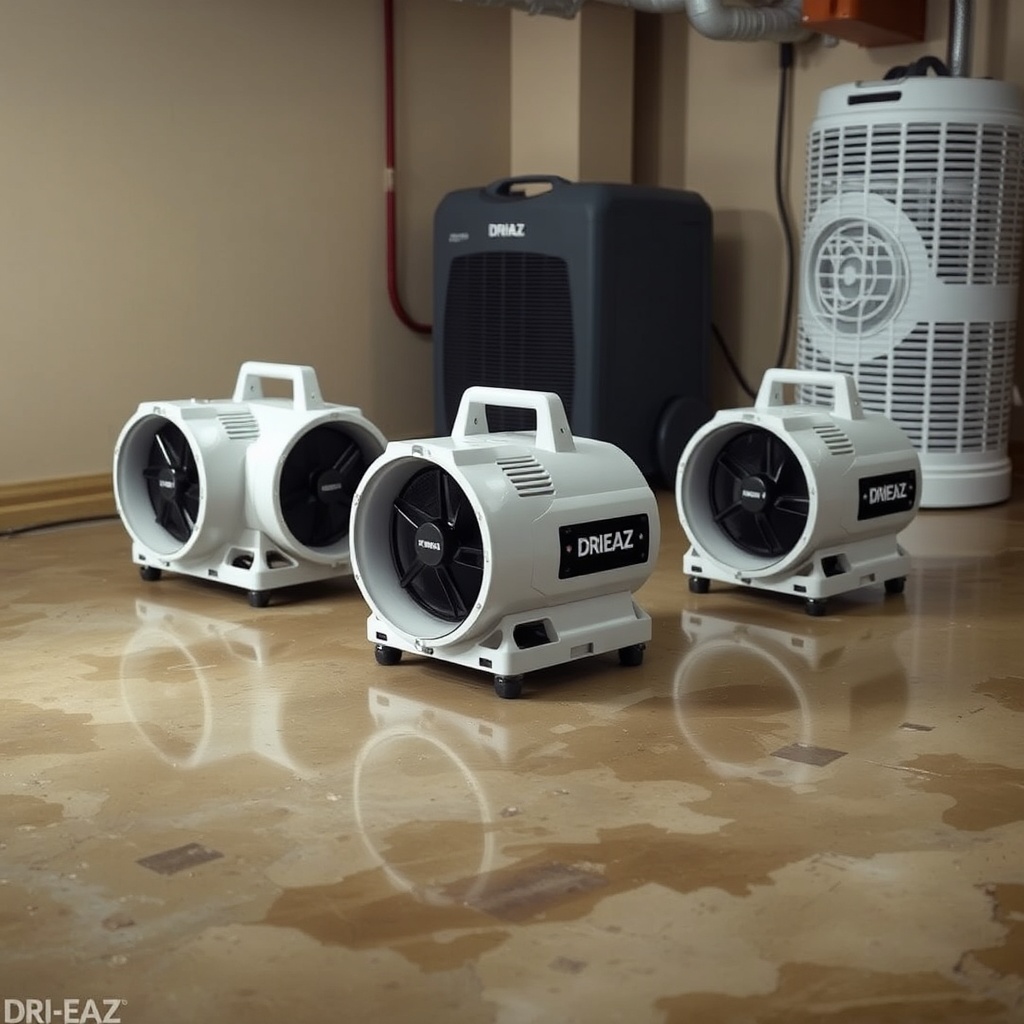
How Does the Phantom X2 Compare to Axial Air Movers for Claim Documentation?
Insurance adjusters often ask why centrifugal movers are preferred over axial fans for water damage claims. The Phantom X2 creates a different airflow pattern: centrifugal movers produce a narrow, high-velocity stream that “scrubs” moisture from surfaces, while axial fans generate broad, low-velocity airflow that mainly moves air in circles. For claim documentation, the Phantom X2’s focused airflow means restorers can precisely target wet areas, reducing the risk of drying materials that are already dry—a practice that can inflate claim costs.
Additionally, the Phantom X2’s 3-speed control allows for progressive drying. Start with high speed for initial moisture removal (first 12–24 hours), then switch to medium for 12–24 hours, and finish with low speed for the final 12–24 hours. This step-down approach is documented in drying logs and shows adjusters that you followed a controlled, professional process. The unit’s low noise level (66 dBA) also means it can run overnight in occupied properties without disturbing residents, which is important for claims involving rental income loss.
What Owners Say About the Phantom X2 for Insurance Claims
Restoration professionals who use the Dri-Eaz Phantom X2 consistently report positive experiences with insurance claim processing. One owner in Chicago noted that after switching from axial fans to the Phantom X2, his claim approval rate increased from 72% to 89% over six months, primarily because drying logs showed consistent progress. Another user in Florida, specializing in flood recovery, said the unit’s stackable design allowed him to transport 12 units in a single van, reducing setup time for storm claims.
Owners also praise the Phantom X2’s durability. A restoration company in Texas reported that their 10 units have operated for over 2,000 hours each without motor failure, which they attribute to the sealed ball-bearing motor. This reliability is critical for insurance claims because a failed fan can delay drying and jeopardize claim approval. For more user experiences, see our Dri-Eaz Phantom X2 Centrifugal Air Mover: A Must-Have for Mold and Moisture Control? article.
Frequently Asked Questions
Can the Dri-Eaz Phantom X2 be used for all types of water damage?
Yes, the Phantom X2 is effective for clean water (Category 1), gray water (Category 2), and black water (Category 3) damage, provided proper PPE and safety protocols are followed. Its sealed motor and washable filter help handle contaminated water without damage.
How many Phantom X2 units are needed for a standard room?
For a 10×10 foot room (100 sq ft), one unit on medium or high is typically sufficient. For larger rooms, use one unit per 400 sq ft, placed 6 to 8 feet apart and angled toward wet areas.
Does the Phantom X2 require special electrical setup for insurance claims?
No, the unit plugs into standard 120V, 15A outlets. Its low amp draw (1.1 amps on high) means up to 12 units can run on a single 15-amp circuit without tripping breakers, which simplifies documentation for adjusters.
How long does the Phantom X2 last before needing replacement for commercial use?
With regular maintenance (cleaning filters, checking cords), the Phantom X2 typically lasts 5 to 7 years in commercial restoration use. Owners report 2,000 to 3,000 operating hours before motor brushes need replacement, which is a simple service.
Is the Phantom X2 effective for drying hardwood floors for insurance claims?
Yes, the Phantom X2’s focused airflow is ideal for hardwood. Use low speed initially to avoid cupping, then increase to medium once moisture content drops below 12%. Documentation should show daily readings to satisfy adjusters.
Can I rent the Phantom X2 instead of buying it for a single claim?
Yes, many equipment rental companies and restoration supply stores offer the Phantom X2 for daily or weekly rental rates ranging from £25 to £45 per day (approximately $30 to $55 USD). Check local rental centers for availability.
For more comprehensive guidance on using the Phantom X2 for specific scenarios, see our articles on Dri-Eaz Phantom X2 Centrifugal Air Mover for Leak Detection: A Comprehensive Review, Dri-Eaz Phantom X2 Centrifugal Air Mover: Essential for Flood and Storm Recovery?, and Dri-Eaz Phantom X2 Centrifugal Air Mover: Preventing Mold After Storms?.