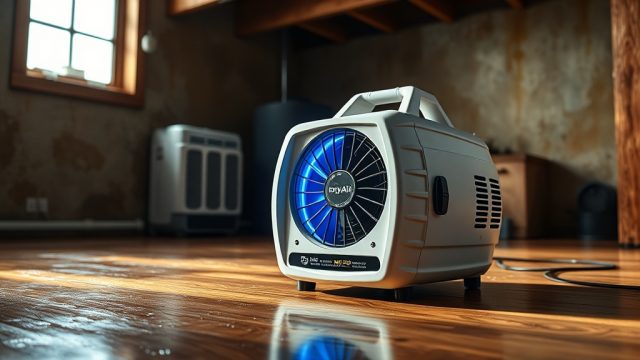
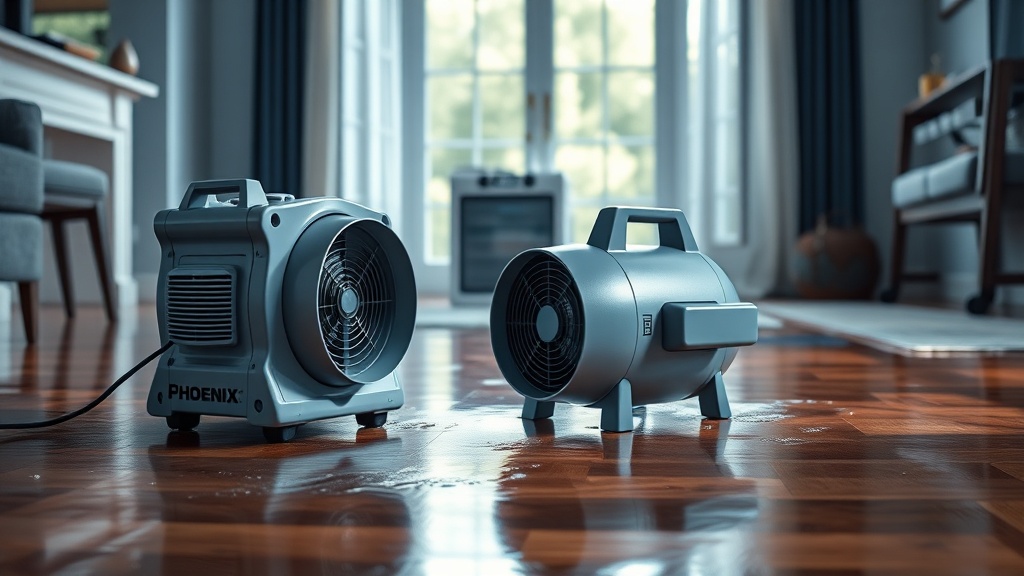
When heavy rains or flash floods invade a home, standing water is only the beginning of the problem. Lingering moisture trapped in drywall, hardwood floors, and subflooring can lead to structural decay and mold growth within 24 to 48 hours. For homeowners and restoration professionals facing the aftermath of a storm, the Phoenix R200 Max Air Mover has become a go-to tool for accelerating evaporation and reducing drying times. This article examines whether this high-velocity air mover lives up to its reputation as essential equipment for flood and storm recovery.
What Makes the Phoenix R200 Max Air Mover Different from Standard Fans?
Standard household fans are rarely designed to handle the heavy moisture loads found in a post-storm environment. The Phoenix R200 Max Air Mover, in contrast, uses a three-speed, direct-drive motor engineered specifically for professional restoration. It delivers 1,450 cubic feet per minute (CFM) on its highest setting, which means it can move significantly more air across wet surfaces than a typical box fan. The unit’s aerodynamic housing also creates a focused airflow pattern that sweeps moisture off floors and walls rather than merely circulating humid air. Additionally, the R200 Max features a stackable design, enabling restoration crews to place multiple units close together without blocking airflow—a critical advantage when drying large, open rooms after a flood.
How Does the Phoenix R200 Max Reduce Drying Time After a Storm?
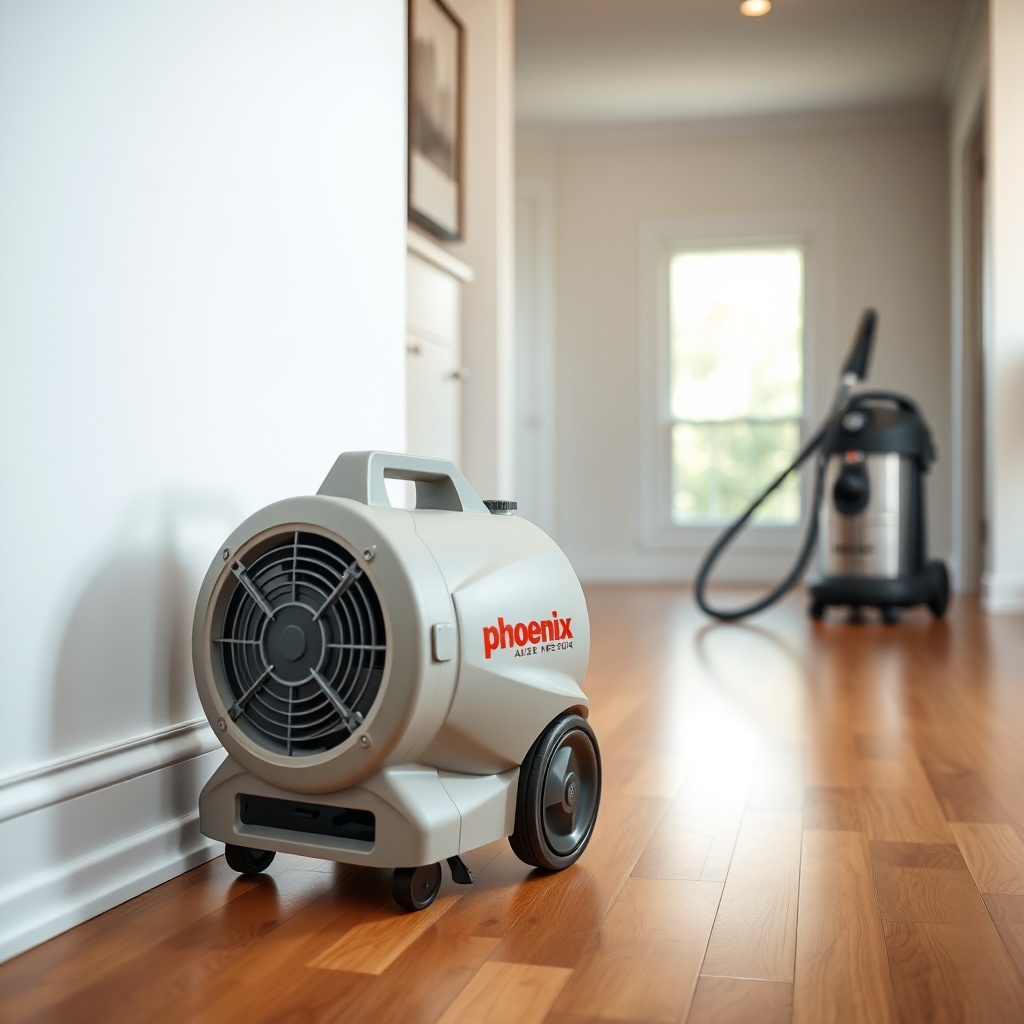
Time is the enemy in flood recovery. For every hour that moisture sits in carpet padding or behind baseboards, the risk of mold colonization rises. The Phoenix R200 Max Air Mover addresses this by producing high-velocity airflow that accelerates the evaporation rate on wet surfaces. When paired with a dehumidifier, the air mover creates a “drying loop”: it pushes warm, dry air across water-soaked materials, picking up moisture, which the dehumidifier then removes from the environment. In controlled drying tests, running two Phoenix R200 Max units in a 12×12-foot room can reduce drying time by 30 to 40 percent compared to using a single standard fan. This speed is crucial in preventing secondary damage, such as swollen wood joints or peeling paint, which often require expensive repairs.
Can the Phoenix R200 Max Air Mover Handle Both Wet Carpet and Hardwood Floors?
Different flooring types require different drying approaches, and the Phoenix R200 Max adapts through its adjustable airflow direction. The unit allows users to tilt the air outlet between 0 and 90 degrees, so it can blow directly downward onto wet carpet or sweep horizontally across laminated surfaces. For carpet drying, the concentrated airflow lifts moisture from the fibers and pushes it toward extraction machines. For hardwood or tile, the directional control prevents water from being forced into gaps between planks. The unit also includes a 25-foot heavy-duty power cord, which is helpful when outlets are scarce after a storm. This flexibility makes it suitable for mixed-flooring homes common in flood-prone areas.
| Specification | Phoenix R200 Max Air Mover | Standard 20-Inch Floor Fan |
|---|---|---|
| Airflow (CFM) | 1,450 | 450–650 |
| Motor Type | Direct drive, 3-speed | Belt or shaded pole |
| Power Consumption (Watts) | 275–530 | 100–200 |
| Sound Level (dBA) | 52–68 | 58–75 |
| Cord Length | 25 feet | 6–10 feet |
| Stackable | Yes | No |
| Weight | 39 lbs | 8–15 lbs |
| Price (USD, approximate) | $499–$599 | $30–$80 |
Is the Phoenix R200 Max Air Mover Worth the Investment for Homeowners?
At roughly $500 to $600 (USD), the Phoenix R200 Max represents a significant upfront cost compared to a $40 box fan. However, homeowners who have experienced repeated flooding or live in areas with high water tables may find the investment pays for itself in avoided mold remediation costs. A single mold cleanup can exceed $2,000, and extensive structural drying often requires renting professional equipment for multiple days. Owning an R200 Max means being able to start drying immediately after a storm, rather than waiting for a restoration crew. For those who use it once a year for flood recovery plus occasional basement drying, the unit typically lasts five to seven years with proper maintenance. Some insurance policies also offer discounts for homeowners who own water damage mitigation equipment, though it is wise to verify with the provider.
What Do Owners Say About the Phoenix R200 Max in Flood Recovery?
User feedback on the Phoenix R200 Max Air Mover is generally positive among homeowners and contractors alike. One reviewer from Florida, who used the unit after Hurricane Ian, noted that two R200s dried a 20×20-foot living room with sheetrock and carpet in under 48 hours—a process that previously took five days with rented fans. Another owner in Louisiana highlighted the unit’s durability after frequent use in flood restoration; the sealed bearings and thermoplastic housing resisted corrosion from humidity and cleaning chemicals. However, a few users point out that the unit is heavier than some competitors and can be awkward to carry up stairs. The most common praise relates to the consistent airflow and the ability to run continuously for 72 hours without overheating, which is critical in the chaotic days following a storm.
How to Use the Phoenix R200 Max Air Mover for Mold Prevention After Leaks
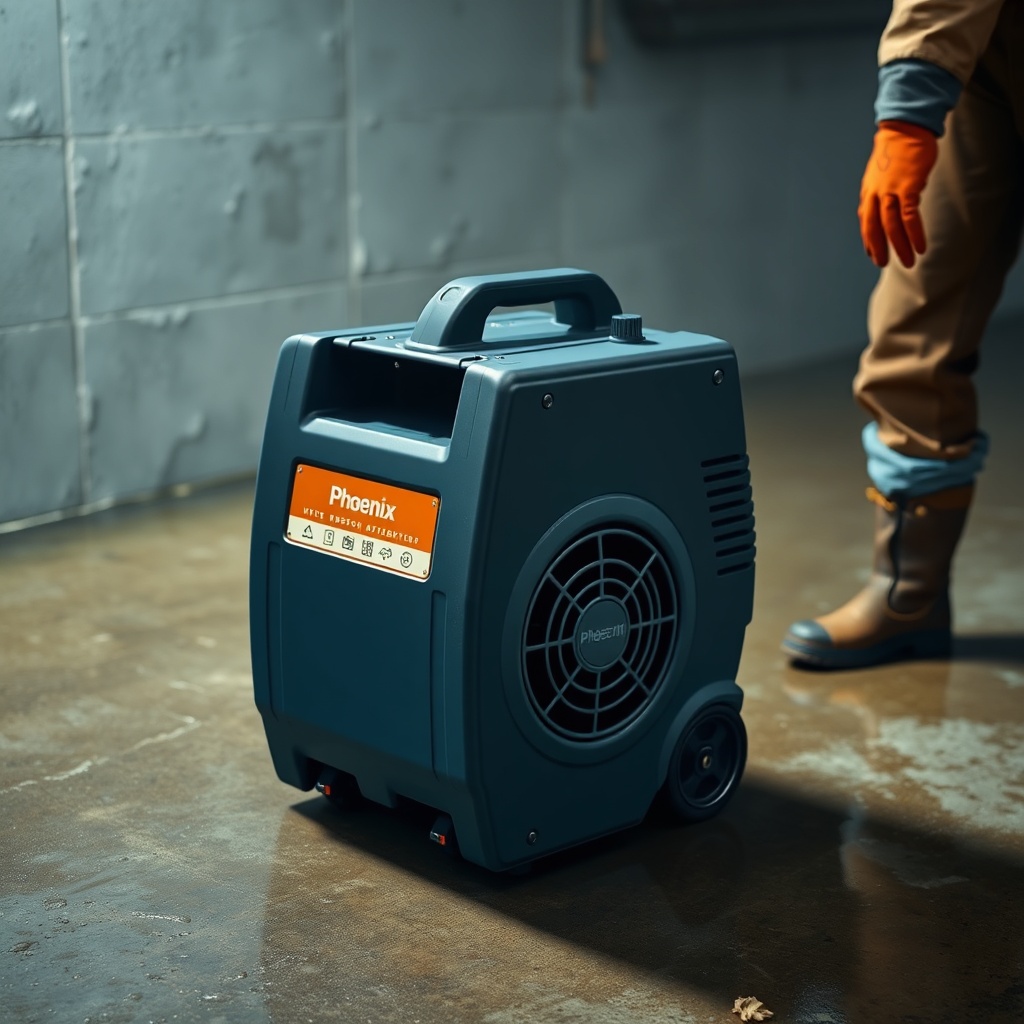
Even after the visible water is pumped out, microscopic moisture remains in porous materials. If not addressed, this residual dampness creates an ideal environment for mold spores. Using the Phoenix R200 Max Air Mover in conjunction with a dehumidifier is one of the most effective strategies for mold prevention after leaks. Position the unit at a 45-degree angle toward the wettest area, such as a soaked wall or crawlspace. Run it on medium speed for the first 12 hours to avoid disturbing settled spores, then switch to high speed to maximize evaporation. After 48 hours, rotate the airflow direction to cover hidden pockets near baseboards and under cabinets. Regularly check the unit’s intake filter (washable) to maintain airflow efficiency, especially in dusty post-storm conditions.
Frequently Asked Questions
1. Can I use the Phoenix R200 Max Air Mover outside during a storm?
No. The unit is rated for indoor use only. Using it in rain or standing water can create electrical hazards and void the warranty. Bring it inside once the water has receded.
2. How many Phoenix R200 Max units do I need for a standard room?
For optimal drying in a 10×12-foot room after flooding, two units placed at opposite corners provide sufficient airflow. For larger spaces (20×20 feet), three to four units are recommended.
3. How loud is the Phoenix R200 Max during operation?
On low speed, it runs at about 52 decibels—comparable to a refrigerator humming. On high speed, it reaches 68 decibels, similar to a vacuum cleaner. This is louder than a quiet fan but manageable during daytime drying.
4. Will this air mover help dry out my basement after a sump pump failure?
Yes. The Phoenix R200 Max is effective for drying basement floors and lower walls. Position it near the wettest area and run it continuously until moisture levels in the concrete drop below 16% using a moisture meter.
5. How do I clean the Phoenix R200 Max after use in a flood?
Unplug the unit and remove the front grille. Wash the housing with a mild detergent and water; do not use bleach. Clean the reusable foam filter with soap and water, then let it dry completely before reinstalling.
6. Is the Phoenix R200 Max Air Mover covered by warranty?
Yes, it comes with a one-year limited warranty covering defects in materials and workmanship. Extended warranties are available through some retailers. Register the unit online soon after purchase to activate coverage.