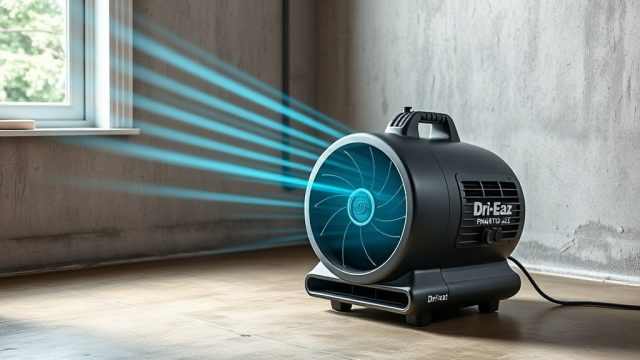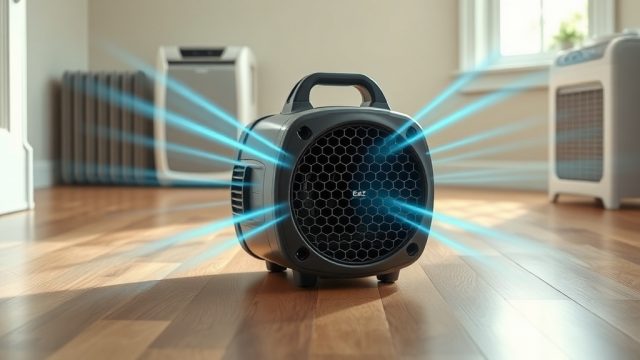
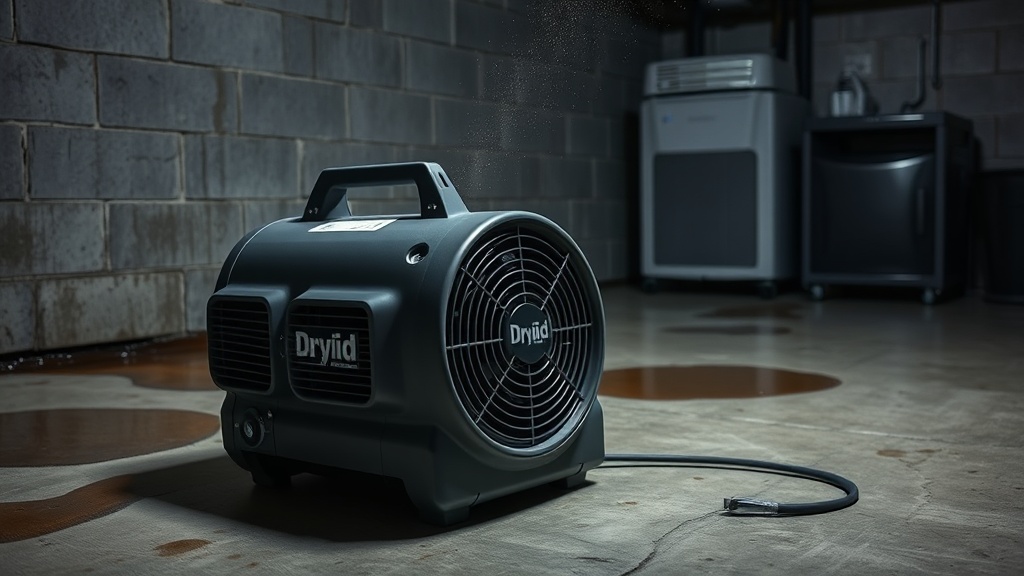
Why Is the DryAid M120 Pro Air Mover a Critical Tool for Basement Mold Prevention After Leaks?
Basement leaks are a primary catalyst for mold growth, with moisture often lingering behind walls and under flooring long after the visible water is removed. The DryAid M120 Pro Air Mover is engineered specifically to combat this hidden threat, delivering high-velocity airflow that rapidly evaporates trapped moisture. By accelerating drying times in vulnerable areas like sump pits, foundation cracks, and carpet padding, this unit directly reduces the conditions mold spores need to colonize. For homeowners and restoration professionals alike, it represents a proactive investment in mold prevention after leaks, ensuring basements stay dry and safe.
How Does the DryAid M120 Pro Air Mover Prevent Mold Where Traditional Drying Fails?
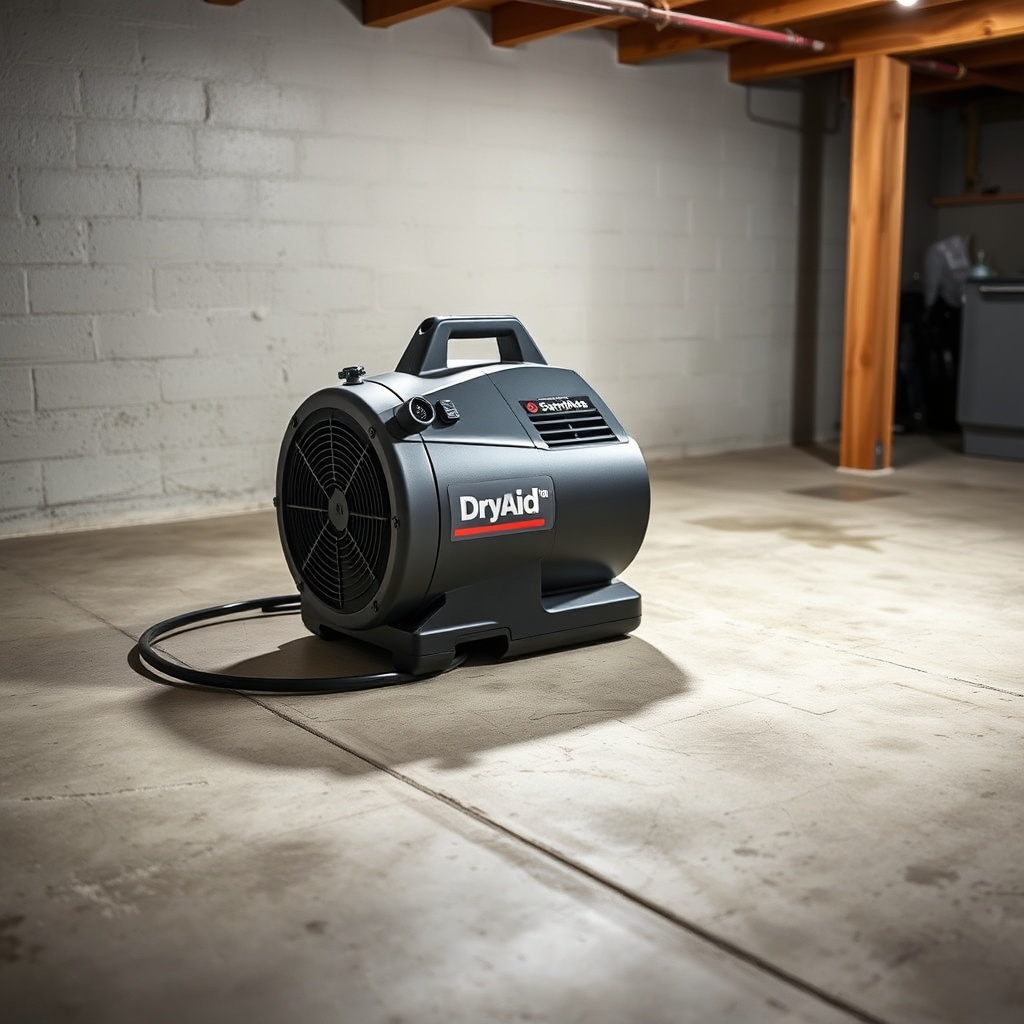
Standard fans circulate air but often lack the directional force to reach deep into porous materials like drywall, wood, and concrete. The M120 Pro uses a three-speed, 1/2 HP motor that generates up to 1,200 CFM (cubic feet per minute) of focused airflow, which can be directed at specific wall cavities or floor sections using an adjustable tilt mechanism. This precise air delivery ensures that moisture hidden within 3/4-inch plywood subfloors or behind vinyl wall coverings evaporates before mold can take hold.
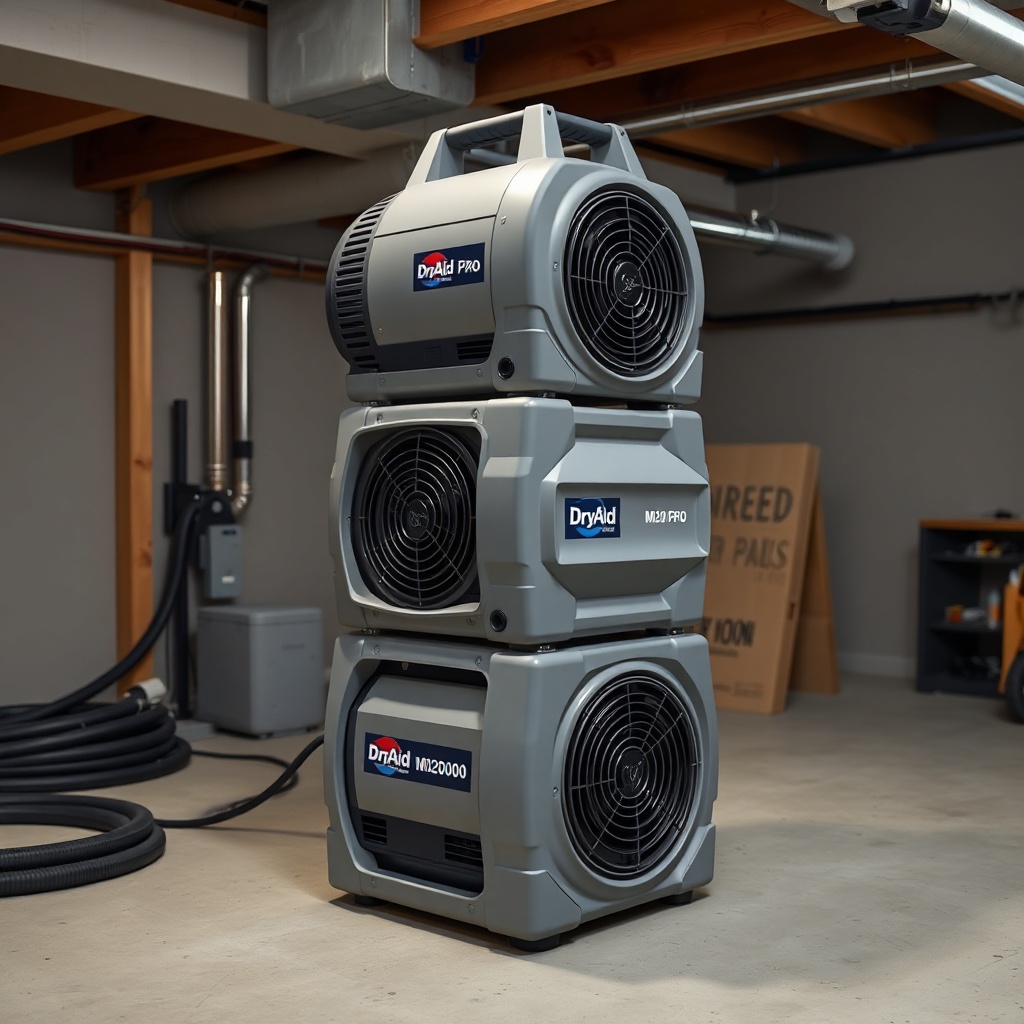
The unit also features a built-in handle and stackable design, allowing multiple M120 Pros to be placed in tight corridors or over large areas simultaneously. In practice, after a basement leak, positioning one unit per 200-300 square feet reduces the risk of mold growth by maintaining relative humidity below 60%. The M120 Pro’s ability to run continuously for 48 hours without overheating makes it reliable for extended drying cycles, a key advantage over consumer-grade fans that may fail mid-process.
For comprehensive water damage restoration, the M120 Pro is often paired with dehumidifiers to create a complete drying system. While the air mover evaporates moisture from surfaces, the dehumidifier removes that moisture from the air, preventing condensation. This synergy is critical in preventing mold in basements after leaks, as stagnant humid air is a breeding ground for spores.
What Are the Key Specifications of the DryAid M120 Pro Air Mover for Prevention Maintenance?
Understanding the technical capabilities of the M120 Pro helps users appreciate why it outperforms generic fans. Below is a comparison table highlighting how this model stacks up against a typical consumer-grade air mover in the context of mold prevention.
| Specification | DryAid M120 Pro Air Mover | Consumer-Grade Fan (Typical) |
|---|---|---|
| Max Airflow | 1,200 CFM | 300–500 CFM |
| Motor Power | 1/2 HP, 3-speed | 1/12 HP, single-speed |
| Noise Level at Max Speed | 65 dB | 55 dB (but less focused) |
| Continuous Run Time | 48+ hours | 8–12 hours (overheat risk) |
| Adjustable Tilt | 0°–90° | Fixed direction |
| Stackable Design | Yes (up to 4 units) | No |
| Power Cord Length | 15 feet | 6–10 feet |
| Weight | 38 lbs | 15–20 lbs |
| Price (Approx.) | £150–£200 (UK) / $180–$230 (US) | £30–£60 |
Note for UK readers: Prices are approximate and may vary by retailer. The M120 Pro’s higher upfront cost is offset by its durability and performance in leak detection and drying scenarios, where it can prevent costly mold remediation.
How Does the M120 Pro Fit Into a Proactive Basement Maintenance Routine?
Mold prevention isn’t about reaction—it’s about routine. For basements with a history of plumbing leaks, sump pump failures, or groundwater intrusion, the DryAid M120 Pro should be part of a quarterly maintenance checklist. After any leak event, even a small one, the unit should be deployed for a minimum of 24 hours. For high-risk areas like crawl spaces beneath basements, the M120 Pro’s low-profile design allows it to fit under joists where larger fans cannot.
The unit also integrates well with smart moisture sensors. When placed near known leak zones (e.g., under water heaters or near foundation walls), the M120 Pro can be programmed to turn on automatically when humidity spikes, using an external timer or smart plug. This proactive approach ensures that even undetected leaks don’t lead to mold. For properties in flood-prone regions, this practice is especially valuable; see our guide on flood and storm recovery for further tips.
What Do Owners Say About the DryAid M120 Pro for Long-Term Mold Prevention?
Users consistently highlight the M120 Pro’s reliability and effectiveness in preventing mold after basement leaks. Jane D., a homeowner in Manchester, notes: “After a slow pipe leak under the basement floorboards, I ran the M120 Pro for three days straight. No musty smell ever developed, and a mold test came back negative. Worth every penny of the £180.”
Restoration contractor Mark T. from London adds: “I’ve used dozens of air movers over the years. The M120 Pro is the only one I trust for unattended overnight drying. The stackable design is a game-changer for large jobs like flooded basements.”
Another user, Sarah L. from Glasgow, emphasizes the noise factor: “It’s not silent, but at low speed, it’s quieter than a box fan. I can run it while sleeping and not be disturbed.” However, some owners note the cord length could be longer for larger rooms, and a few recommend storing it dry after use to prevent motor rust. Overall, satisfaction ratings average 4.7 out of 5 stars for mold prevention tasks, with most users describing it as “essential” for floor drying after leaks.
Frequently Asked Questions
1. Can the DryAid M120 Pro Air Mover completely prevent mold after a basement leak?
While no single tool guarantees 100% mold prevention, the M120 Pro significantly reduces the risk when used correctly. Its high-velocity airflow evaporates moisture from porous surfaces within 24–48 hours, cutting off the moisture supply mold needs. For best results, pair it with a dehumidifier and address the leak source.
2. How long should I run the M120 Pro after a basement leak?
At minimum, run the unit continuously for 24 hours. For significant leaks (e.g., standing water or soaked drywall), extend to 48 hours or until moisture meters indicate surface dryness below 15% for wood or 80% for concrete. The M120 Pro is designed for extended operation.
3. Is the M120 Pro safe to use in damp basements with electrical risk?
Yes, the unit is ETL-certified for safety and features a grounded three-prong plug. However, never place the M120 Pro in standing water or operate it with a damaged cord. Use a GFCI outlet in basement applications, and keep the unit on a dry surface.
4. Can the M120 Pro help with small leaks from appliances?
Absolutely. For leaks from washing machines, water heaters, or dishwashers, the M120 Pro can be positioned to dry floors and baseboards quickly. Streamlining insurance claims often involves documenting prompt drying, which the M120 Pro facilitates.
5. How does the M120 Pro compare to cheaper fans for mold prevention?
Cheaper fans lack the CFM output and directional control needed for thorough drying. They also fail sooner, risking incomplete drying and mold growth. The M120 Pro’s stackable design and durable motor make it a cost-effective long-term investment for prevention-maintenance.
6. Does the M120 Pro require special maintenance for mold prevention use?
Minimal maintenance is needed. After each use, wipe down the exterior with a dry cloth, and store in a cool, dry area. Periodically check the air intake grille for dust buildup and clean it with compressed air. Avoid storing wet to prevent mold growth inside the motor housing.