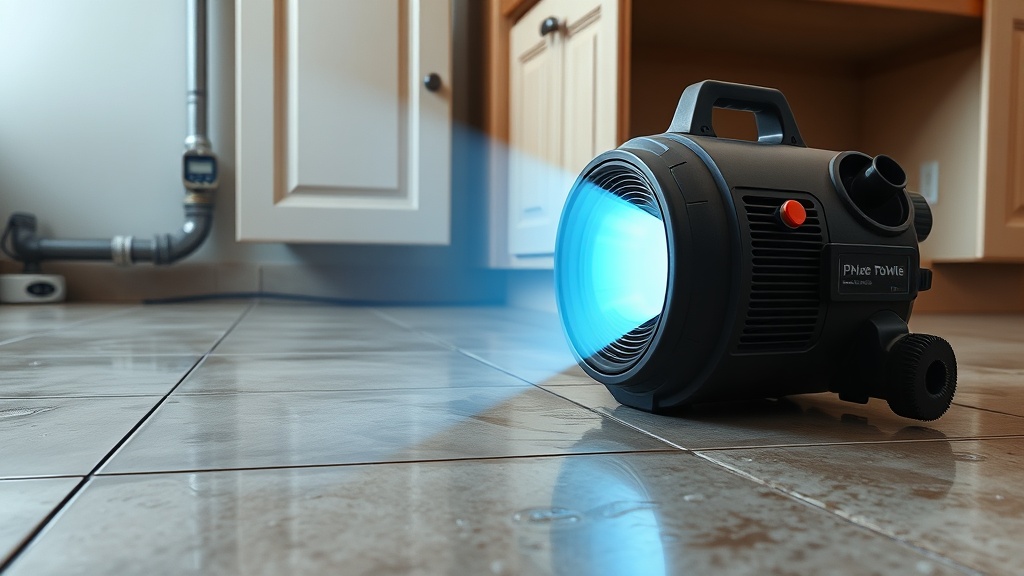
Phoenix R200 Max Air Mover: Essential for Leak Detection and Drying?
When a hidden pipe burst or a slow appliance leak sends moisture creeping into walls and under floors, restoration professionals need equipment that accelerates drying and aids in moisture mapping. The Phoenix R200 Max Air Mover has become a staple in the water damage industry for its high-velocity airflow and durability. For property owners and technicians alike, understanding whether this unit is essential for leak detection and drying is critical to minimizing secondary damage and preventing mold growth.
Why Does Airflow Matter for Leak Detection and Drying?
Effective leak detection and structural drying hinge on moving large volumes of air across wet surfaces. Even the most sensitive moisture meters cannot fully assess a leak’s footprint until standing water and trapped humidity are addressed. The Phoenix R200 Max Air Mover, with its 2,800 CFM (cubic feet per minute) output, creates a consistent airflow pattern that helps evaporate moisture from floorboards, drywall, and subfloors. This airflow not only speeds drying but also exposes hidden damp spots by causing surface moisture to evaporate evenly—allowing thermal cameras and hygrometers to pinpoint residual leaks more accurately.
For example, a leaking supply line behind a kitchen cabinet may leave moisture trapped in particleboard. Without high-velocity air movers like the R200 Max, this area can remain wet for days, leading to warping and microbial growth. By circulating air at 28,000 feet per minute, this unit reduces drying time by up to 50% compared to standard fans, making it indispensable for leak scenarios where every hour counts.
How Does the Phoenix R200 Max Compare to Smaller Air Movers?
Choosing the right air mover for leak drying often comes down to CFM output, power consumption, and portability. The table below compares the Phoenix R200 Max with two common smaller units used in residential plumbing repair.
| Specification | Phoenix R200 Max | Standard 18″ Axial Fan | Mid-Size Centrifugal Mover |
|---|---|---|---|
| Max CFM | 2,800 | 1,200 | 1,800 |
| Speed Settings | 3 (Low/Med/High) | 2 | 3 |
| Power Draw (Amps) | 3.5 | 1.2 | 2.8 |
| Decibel Rating (High) | 68 dBA | 55 dBA | 62 dBA |
| Cord Length | 25 ft | 10 ft | 15 ft |
| Stackable | Yes (up to 4 high) | No | Yes (2 high) |
| Weight | 38 lbs | 19 lbs | 29 lbs |
| Typical Price (USD) | $1,150 | $150 | $550 |
As shown, the R200 Max’s higher CFM output and stackable design make it better suited for using the Phoenix R200 Max Air Mover to prevent mold after leaks, where rapid drying in confined crawlspaces or large open areas is required.
Can the Phoenix R200 Max Help Locate Hidden Leaks?
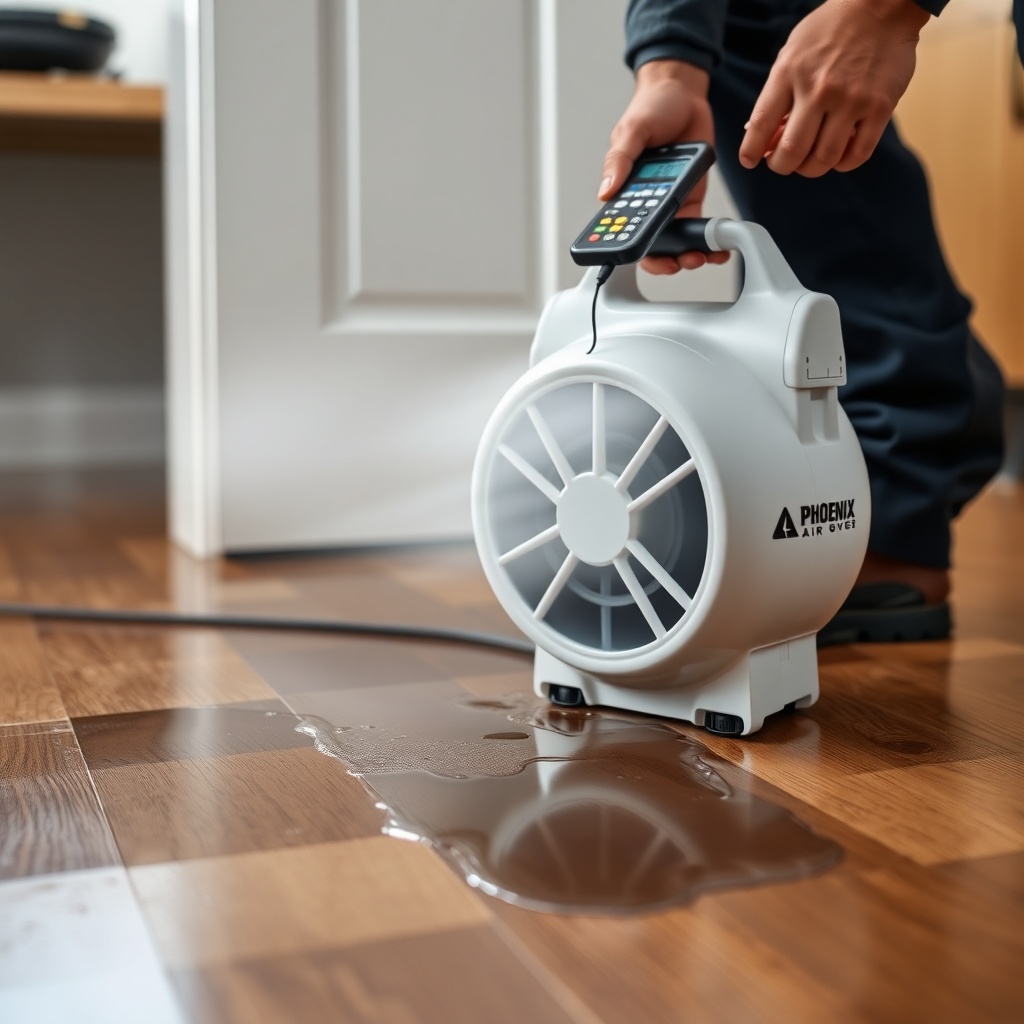
While the air mover itself does not detect leaks, its role in creating controlled drying conditions is essential for leak detection workflows. When a restoration contractor suspects a slab leak or a hidden pipe failure in a wall cavity, they first set up multiple R200 Max units to evaporate surface moisture. As the visible moisture dries, any persistently wet zones stand out, guiding thermal imaging cameras and pin-point moisture meters. This technique, known as “aggressive drying assessment,” is widely used by IICRC-certified technicians to narrow down leak origins.
For instance, after a toilet flange leak on a concrete slab, standard drying may leave the core damp. By directing R200 Max airflow at 45-degree angles across the floor, technicians can reduce ambient humidity in the zone, making it easier to detect a continuous moisture signature from the leak itself. The unit’s sealed motor and impact-resistant housing also allow it to operate in wet conditions without short-circuiting, a safety feature critical for leak detection environments.
Are These Air Movers Cost-Effective for Homeowners vs. Pros?
At approximately $1,150 per unit, the Phoenix R200 Max is a professional-grade investment. For a single-use leak cleanup, renting the unit for $85–$125 per day from a local equipment supplier is more practical. However, for property managers or restoration companies handling recurring plumbing failures, owning several units reduces long-term costs. The R200 Max’s energy efficiency—drawing only 3.5 amps on high—means running three units for 24 hours costs roughly $3.50 in electricity (at $0.12/kWh), far less than the cost of mold remediation if drying is delayed.
For those in flood-prone areas, the unit’s rugged design and stackable storage make it a valuable addition to emergency kits. Combined with proper dehumidifiers, the R200 Max forms a drying system that meets insurance standards for structural recovery. To see how this unit fits into larger restoration plans, refer to Phoenix R200 Max Air Mover: Essential for Flood and Storm Recovery? for scenario-specific guidance.
What Owners Say About the Phoenix R200 Max
Restoration contractors and water damage specialists consistently praise the R200 Max for its reliability and drying power. One owner from a property restoration firm in Chicago noted, “After two years of daily use—pulling water out of flooded basements and drying hardwood after pipe bursts—our three units still run like new. The sealed motor handles splashes and dust without hiccups.” Another user, an independent leak detection technician in Florida, highlighted the unit’s stackability: “I can transport four in my van without losing space, and they’re quiet enough for residential jobs at night.”
Negative feedback typically centers on the initial price and weight—38 lbs can be cumbersome for some technicians. However, most agree that the build quality justifies the cost, especially when drying critical areas behind walls where mold risk is high. Many owners also pair the R200 Max with Phoenix R200 Max Air Mover: Essential for Drying After Storm Damage? to manage storm intrusion scenarios effectively.
How to Use the Phoenix R200 Max for Leak Detection and Drying
To maximize the R200 Max for leak drying, follow these best practices:
- Position the unit 2–3 feet from the wet surface, angled at 30–45 degrees to create a “wall” of moving air.
- Use multiple units in a circular pattern to prevent “dead zones” where moisture can stagnate.
- Pair with a dehumidifier and monitor relative humidity every 4–6 hours using a hygrometer.
- For hidden leaks, run units on high for 12 hours, then inspect for residual dampness with a moisture meter.
- If drying saturated drywall, remove baseboards and drill airflow holes to allow the mover to reach wall cavities.
For insurance documentation, log drying progress with photos and moisture readings. Phoenix R200 Max Air Mover Review: Streamlining Insurance Claims After Water Damage? offers tips on documenting equipment usage for claim approval.
Frequently Asked Questions
Can the Phoenix R200 Max be used for leak detection directly?
No, it is not a detection device. It accelerates drying to reveal hidden moisture, making it easier to pinpoint leaks with meters or thermal cameras.
How loud is the R200 Max during operation?
At high speed, it produces 68 dBA—comparable to a vacuum cleaner. For quieter operation, low or medium settings are available, though drying time will increase.
Is the unit safe to use on wet carpets?
Yes. The sealed motor and corrosion-resistant housing allow safe operation on damp surfaces. Always ensure the cord and plug remain dry.
What is the warranty on the Phoenix R200 Max?
Phoenix offers a 5-year limited warranty on the motor and a 2-year warranty on the housing and switches.
Can I stack more than two units for storage?
Yes, the R200 Max is designed to stack up to four units high via integrated interlocking feet, saving floor space in vans or storage rooms.
How much does it cost to rent a Phoenix R200 Max per day?
Rental rates range from $85 to $125 per day, depending on location and supplier. Many equipment rental shops stock this model for professional use.